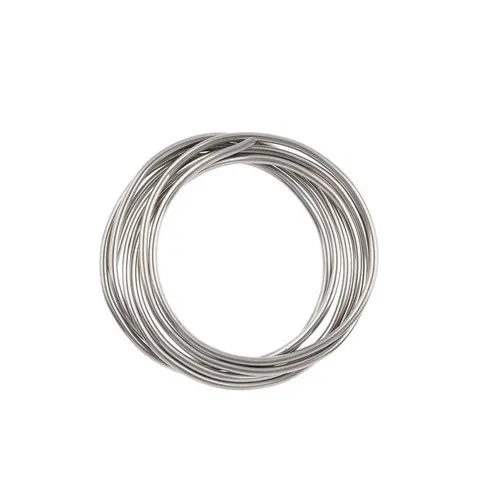


High Quality Galvanized Wire to Buy Metal Hangers in Bulk
Finding high-performance raw materials for disposable clothing supports requires a precise balance of tensile strength and corrosion resistance. For industrial buyers looking to buy metal hangers in bulk, the quality of the underlying galvanized wire determines the longevity of the final product and the satisfaction of the end-user. Low-carbon steel, when processed through professional annealing and redrawing, provides the necessary flexibility for shaping without sacrificing structural integrity.
The effectiveness of these products depends heavily on the zinc coating adhesion and thickness. A superior coating prevents oxidation in humid environments, ensuring that the bright, clean surface remains intact during shipping and retail. By focusing on precise diameter control and consistent tensile properties, manufacturers can produce hangers that bear significant weight without permanent deformation, meeting the rigorous demands of western consumer markets.

Technical Engineering of Galvanized Wire for Hanger Manufacturing
The production of specialized wire for hangers begins with the selection of high-grade low carbon steel. To achieve the ideal balance of malleability and strength, the material undergoes a series of critical metallurgical processes. First, annealing is applied to relieve internal stresses, followed by redrawing to achieve the exact gauge required for automated hanger forming machines.
A key technical differentiator is the galvanizing process. To ensure maximum protection against oxidation, the wire is evenly coated with zinc. Advanced equipment is utilized to maintain a uniform layer, preventing "thin spots" that could lead to premature rusting. Through extensive experimentation, the zinc coating amount has been optimized to reach 38 g/sqm, which significantly enhances the product's resistance to corrosion and maintains a bright aesthetic over a longer operational period.
- Material Base: Low carbon steel for optimal bending properties.
- Surface Treatment: Precise electric galvanizing for a clean, bright finish.
- Dimensional Accuracy: Advanced redrawing ensures consistent diameters across large batches.
- Structural Integrity: High tensile strength prevents the hangers from bending under load.

Performance Metrics and Load-Bearing Capabilities
From a procurement perspective, the mechanical properties of the wire are the most critical factors. The tensile strength of our specialized hanger wire ranges between 780-860 N (MPa/sqmm). This high strength ensures that the finished clothing hanger can easily bear weights exceeding 2 kg without snapping or losing its shape, which is a fundamental requirement for garments like heavy coats or denim.
Equally important is the elongation rate, which is maintained at approximately 15%. This specific rate allows the wire to be bent into the complex shapes of a hanger during the manufacturing process without creating micro-cracks in the zinc layer. If the elongation is too low, the coating may flake off during bending; if it is too high, the hanger will be too soft and prone to sagging. Our precise control over the redrawing process ensures this critical balance is met for every spool produced.
Industrial Application and Specification Selection
Different types of garments require different hanger gauges. In the global market, specific diameters have become the industry standard based on the intended use-case. For lightweight disposable hangers, a diameter of 1.9mm is often sufficient. However, for more robust commercial applications, diameters of 2.0mm, 2.2mm, and 2.3mm are commonly employed to provide additional rigidity.
The choice of gauge directly impacts the cost-efficiency of the production line. A thinner wire reduces material costs but may compromise the perceived quality of the hanger. By analyzing the specific weight of the target clothing items, buyers can select the most economical diameter that still provides the necessary structural support. This technical alignment between material specification and end-use is what separates professional-grade industrial supplies from generic wire products.
Technical Specifications of Galvanized Hanger Wire
| Wire Diameter (mm) | Zinc Coating (g/sqm) | Tensile Strength (MPa) | Typical Application |
|---|---|---|---|
| 1.9mm | 15-38 | 780-860 | Lightweight Disposable Hangers |
| 2.0mm | 15-38 | 780-860 | Standard Apparel Support |
| 2.2mm | 15-38 | 780-860 | Medium-Duty Clothing Hangers |
| 2.3mm | 15-38 | 780-860 | Heavy-Duty Garment Support |
| Custom | Application-specific | 780-860 | Specialized Industrial Use |
Quality Assurance in Metal Wire Production
Maintaining consistency across thousands of tons of production requires a rigorous quality management system. Adhering to ISO 9001 and ISO 14001 standards ensures that every batch of wire meets the same chemical and physical specifications. This is particularly important for automated production lines where a slight variation in diameter or hardness can lead to machine jams or defective products.
Our quality inspection process focuses on two main areas: surface adhesion and tensile consistency. We use specialized testing equipment to verify that the zinc layer is firmly bonded to the steel substrate, preventing delamination. By controlling the entire process—from the initial electric galvanized wire line to the final precise redrawing—we eliminate the risks associated with multi-vendor sourcing, providing a one-stop purchasing experience for global clients.
Procurement Considerations for Global Distributors
When sourcing materials for hanger production, distributors should look beyond the initial price per ton. The "true cost" of the material includes the scrap rate during production and the rate of customer returns due to rusting. Investing in wire with a higher zinc coating (up to 38 g/sqm) reduces these hidden costs by ensuring a longer shelf life and higher product reliability in diverse climates, from the humidity of Southeast Asia to the temperate zones of Europe.
Furthermore, the ability of a supplier to provide consistent gauges is paramount. Inconsistent wire diameters can lead to uneven hanger shapes, which negatively impact the retail presentation of clothing. Partnering with a manufacturer that integrates R&D, production, and quality inspection allows for better customization and the ability to scale production quickly as market demands shift.
Frequently Asked Questions About Hanger Wire
What is the ideal zinc coating for disposable metal hangers?
For optimal corrosion resistance and a bright surface, a zinc coating of 15-38 g/sqm is recommended. Higher levels, such as 38 g/sqm, significantly improve the product's ability to resist oxidation over long periods.
Which wire diameter is most common for standard clothes hangers?
The most commonly used specifications are 1.9mm, 2.0mm, 2.2mm, and 2.3mm, depending on the intended weight capacity of the hanger.
How much weight can a hanger made from this wire support?
With a tensile strength of 780-860 N (MPa/sqmm), hangers manufactured from our wire can typically bear more than 2 kg without permanent deformation.
Why is the annealing process important for hanger wire?
Annealing removes internal stresses from the steel, making the wire flexible enough to be bent into the hanger shape without snapping or cracking the galvanized coating.
Can you provide customized diameters for specific industrial needs?
Yes, through our precise redrawing process and advanced equipment, we can provide various gauges to meet specific customer requirements and international standards.
What certifications ensure the quality of the galvanized wire?
Our production follows the ISO 9001 quality management system and ISO 14001 environmental management system, ensuring consistent quality and sustainable manufacturing practices.
Technical References and Industry Standards
- ISO Standards for Quality Management Systems
- ASTM International Material Testing Standards
- World Steel Association - Low Carbon Steel Guidelines
- International Zinc Association - Galvanizing Best Practices
Selecting the right raw material is the first step toward a high-quality finished product. By prioritizing tensile strength and coating adhesion, you ensure a durable and professional result for your clothing support lines.
Related Industrial Insights