-
 Phone:
 -
 Email:
Durable Chain Link Fence Mesh: Secure & Affordable Fencing
The Enduring Efficacy of Chain Link Fence Mesh in Modern Infrastructure
In the realm of perimeter security and access control, the utility and adaptability of chain link fence mesh remain unparalleled. This foundational material provides a robust, cost-effective, and highly versatile solution across a multitude of industrial and commercial applications. As a critical component of security infrastructure, its design inherently balances visibility with formidable barrier properties.
Current Industry Trends and Market Dynamics
The market for perimeter security solutions, including traditional chain link fence and advanced chain link wire fencing, is experiencing continuous evolution driven by heightened security concerns, infrastructure development, and technological advancements. Key trends include the integration of smart surveillance systems, enhanced material coatings for extended service life, and an increasing demand for sustainable manufacturing practices. We observe a significant push towards customizable solutions that meet specific site requirements, moving beyond generic installations to engineered security systems. The global market for security fencing is projected to grow at a Compound Annual Growth Rate (CAGR) of over 6% from 2023 to 2030, driven by the expansion of industrial facilities, public infrastructure, and residential complexes.
Moreover, the demand for high-quality chain fence supplies from reputable chain link fence company is on the rise, emphasizing durability, regulatory compliance, and installation efficiency. Industry players are focusing on innovative coating technologies, such as advanced PVC and polyester powder coatings, to offer superior corrosion resistance and aesthetic integration into diverse environments, thereby extending the practical lifespan of these crucial security assets.
The Precision Manufacturing Process of Chain Link Fence Mesh
The creation of high-quality chain link fence mesh involves a meticulously controlled manufacturing process, ensuring the final product meets stringent performance and durability standards. Our process emphasizes material integrity, precision engineering, and rigorous quality control at every stage.
Key Stages of Production:
- Raw Material Selection: High-grade steel wire, typically low-carbon steel, is chosen for its ductility and strength. For enhanced longevity, options include galvanized steel wire (hot-dip or electro-galvanized for zinc coating), or steel wire prepared for PVC/PE coating. All materials adhere to ASTM A853 standards for steel wire.
- Wire Drawing: The selected wire undergoes a cold-drawing process to achieve the precise diameter (gauge) required for the specific mesh specification. This process enhances the tensile strength and surface finish of the wire.
- Weaving (Knitting): Specialized automated weaving machines form the distinctive diamond pattern of the chain link fence mesh. Wires are fed into the machine, twisted, and intertwined to create a continuous, interlocking fabric. Modern CNC-controlled weaving equipment ensures uniform mesh size and consistent tension across the entire roll.
-
Finishing and Coating:
- Galvanization: For uncoated wire, hot-dip galvanization after weaving provides a thick, protective zinc layer, adhering to ASTM A116 or ASTM A392 for galvanized steel chain link fence fabric. This process significantly boosts corrosion resistance.
- PVC/PE Coating: If PVC/PE coating is specified, the woven galvanized wire mesh is cleaned, pre-heated, and then passed through a fluidized bed of plastic powder or an extrusion process to apply a uniform, durable polymer layer. This offers superior corrosion protection, UV resistance, and aesthetic appeal, meeting ASTM F668 standards for PVC-coated steel chain link fence fabric.
- Selvage Formation: The edges of the mesh are either knuckled (bent over) or twisted (barbed) to prevent unraveling and enhance safety and security.
- Quality Control & Testing: Throughout the process, strict quality control measures are implemented. This includes checking wire diameter, mesh size, coating thickness (e.g., zinc layer thickness measured via magnetic induction or weighing method), tensile strength, adhesion of coatings, and overall dimensional accuracy. Products are tested to meet international standards such as ISO 9001 for quality management and ASTM F668 for various performance parameters.
- Packaging: Finished rolls are compactly packaged for safe transport, often with protective wrapping to prevent damage during shipping.
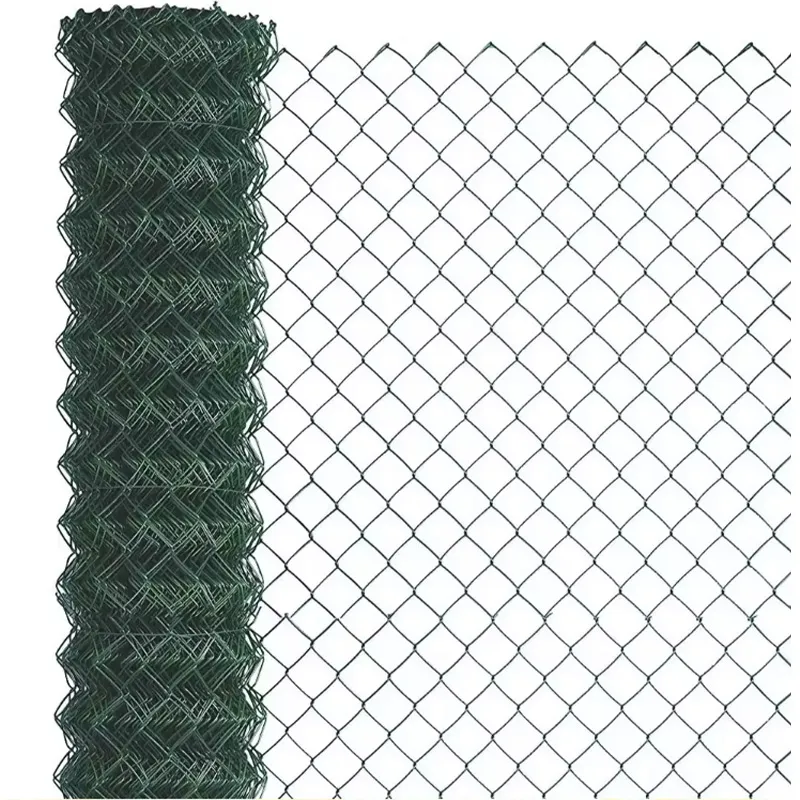
Automated weaving ensures precise mesh formation and consistent quality.
This structured approach ensures that every batch of chain link fence mesh delivers optimal performance and a service life typically exceeding 20-30 years for galvanized products, and 15-25 years for PVC-coated variants, depending on environmental conditions and maintenance. Target industries such as petrochemical, metallurgy, and water supply & drainage rely on this consistent quality for critical infrastructure protection.
Technical Specifications and Performance Parameters
Understanding the technical specifications of chain link fence mesh is crucial for selecting the appropriate product for specific industrial and commercial applications. These parameters directly influence the security level, durability, and compliance with project requirements.
Key Specifications:
| Parameter | Description | Typical Range / Standard |
|---|---|---|
| Wire Gauge (SWG/BWG) | Diameter of the steel wire before coating. Lower gauge numbers indicate thicker wire. | 6 SWG (4.88mm) to 12 SWG (2.64mm) |
| Mesh Size (Opening) | The diagonal measurement of the diamond-shaped opening. Smaller mesh provides higher security. | 1" (25mm) to 4" (100mm). Common: 2" (50mm), 2.25" (57mm). |
| Roll Height | The vertical height of the fence fabric. | 3 ft (0.9m) to 12 ft (3.6m) |
| Roll Length | The total length of the fence fabric in a roll. | 25 ft (7.6m) to 50 ft (15.2m) |
| Coating Type | Protective layer applied to the steel wire. | Galvanized (Class 1, 2, 3), PVC Coated (Vinyl), Aluminized |
| Tensile Strength | The resistance of the wire to breaking under tension. Critical for security applications. | Min. 75,000 psi (517 MPa) for core wire (ASTM A853) |
| Zinc Coating Weight | Minimum amount of zinc per unit area for galvanized wire. | Class 1: 1.2 oz/ft² (366 g/m²), Class 2: 2.0 oz/ft² (610 g/m²), Class 3: 2.0 oz/ft² (610 g/m²) (ASTM A392) |
These specifications are crucial for engineers and procurement managers in target industries such as petrochemical, where corrosion resistance is paramount; metallurgy, demanding robust physical barriers; and water supply & drainage facilities, requiring reliable perimeter security. Compliance with national and international standards like ASTM F668, ASTM A392, and ISO 9001 guarantees product integrity and performance.
Technical Advantages and Performance in Demanding Environments
The inherent design and material science behind chain link fence mesh provide a suite of technical advantages, making it a preferred choice for diverse B2B applications, especially where durability, security, and cost-efficiency are critical.
Core Advantages:
- Exceptional Durability and Longevity: High-quality galvanized and PVC-coated chain link wire fencing offers superior resistance to weathering, rust, and UV degradation. A properly installed galvanized fence can last 20-30 years, while PVC-coated options can extend this to 15-25 years even in challenging climates, minimizing lifecycle costs.
- Corrosion Resistance: For industries exposed to harsh elements (e.g., coastal areas, chemical plants), advanced coatings like Class 3 galvanization or thick PVC layers provide an impenetrable barrier against corrosion, crucial for maintaining structural integrity and preventing costly premature replacement. This energy-saving attribute, by preventing material degradation, contributes to operational efficiency.
- High Security and Deterrence: The interwoven mesh structure is difficult to cut or climb without specialized tools, offering a robust physical deterrent. Varying mesh sizes and wire gauges allow for scalability of security levels, from general demarcation to high-security enclosures, especially when paired with barbed or razor wire.
- Cost-Effectiveness: Compared to solid barrier fencing solutions, chain link fence offers a significantly lower initial investment and reduced maintenance costs over its extensive service life, providing an excellent return on investment for large-scale projects.
- Visibility and Surveillance Integration: The open mesh design allows for clear visibility of the secured area, facilitating effective surveillance and monitoring without obstruction. This is vital for industrial sites where continuous oversight is required.
- Flexibility and Adaptability: Easily conforms to uneven terrain and can be readily integrated with various access control systems, security sensors, and aesthetic enhancements.
Diverse Application Scenarios and Illustrative Case Studies
The versatility of chain link fence mesh makes it an indispensable component across a vast spectrum of industrial, commercial, and public sector applications, providing robust security and demarcation solutions.
Typical Application Areas:
- Industrial & Manufacturing Facilities: Perimeter security, equipment segregation, storage area enclosures. Essential for protecting valuable assets and defining operational zones.
- Petrochemical Plants & Refineries: High-security fencing to prevent unauthorized access to hazardous areas, often integrated with additional security measures like barbed wire. Corrosion-resistant coatings are paramount in these environments.
- Power Generation & Utility Sites: Securing substations, power plants, and transmission line perimeters against intrusion and vandalism.
- Water Treatment Plants & Reservoirs: Critical for public health and safety, securing water infrastructure from contamination and unauthorized entry.
- Transportation Hubs: Fencing for airports, railway lines, and port facilities to manage access and ensure safety.
- Correctional Facilities & High-Security Zones: Providing a primary or secondary barrier layer, often with enhanced specifications (e.g., thicker gauge, smaller mesh) and security toppings.
- Sports & Recreation Facilities: Enclosing sports fields, tennis courts, and playgrounds, offering durability and spectator visibility.
Application Case Studies:
A large petrochemical complex in a coastal region required a robust, highly corrosion-resistant perimeter security solution. We supplied 5,000 linear meters of 9-gauge steel, 2-inch mesh, hot-dip galvanized and subsequently PVC-coated chain link fence mesh, with an additional 3 strands of barbed wire topping. The dual coating system provided superior protection against saline air and industrial atmospheric corrosion, projected to extend the fence's service life beyond 25 years. The client reported enhanced security and significantly reduced maintenance requirements compared to previous solutions.
A municipal water treatment plant needed to upgrade its security to meet new regulatory compliance standards. We provided a customized solution utilizing 11-gauge, 1.75-inch mesh, green PVC-coated chain link wire fencing, complemented by automated swing gates and integrated access control. The smaller mesh size enhanced anti-climb properties, while the green coating allowed for better aesthetic integration with the surrounding natural landscape. Customer feedback highlighted the ease of installation and the visually unobtrusive yet highly effective barrier.
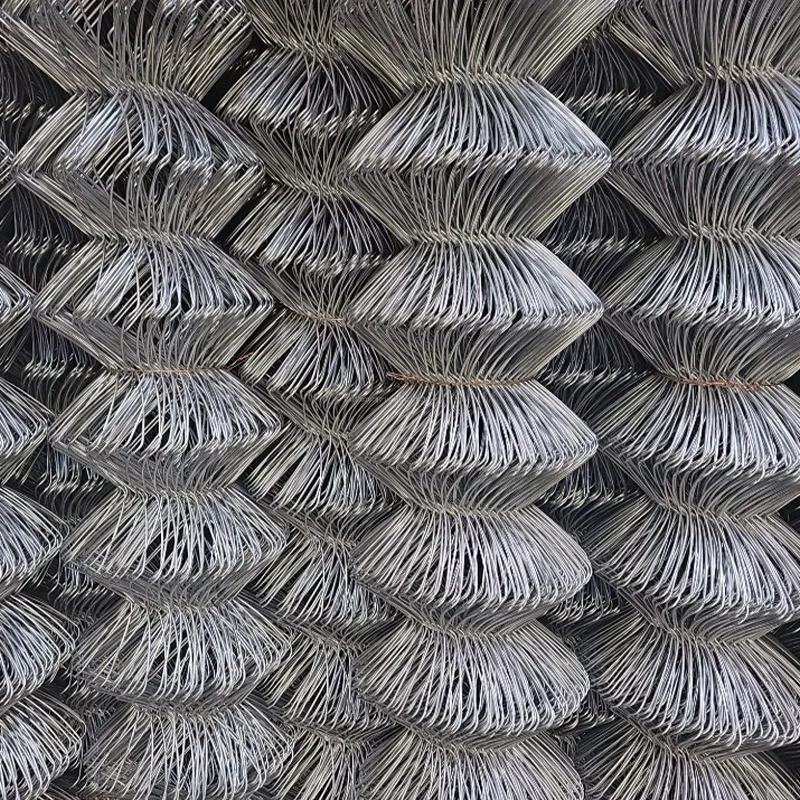
Chain link fencing provides adaptable and secure perimeters for diverse industrial facilities.
Vendor Comparison and Selection Criteria for Chain Link Fence Suppliers
Selecting the right supplier for chain link fence mesh is paramount for project success, long-term performance, and cost efficiency. A comprehensive evaluation of potential vendors goes beyond mere price comparison to encompass several critical factors.
Key Vendor Selection Criteria:
- Material Quality & Sourcing: Verify adherence to industry standards (e.g., ASTM, ISO) for steel wire and coatings. Inquire about the origin and certification of raw materials.
- Manufacturing Capabilities: Assess the vendor's production capacity, automation levels, and quality control processes (e.g., ISO 9001 certification). High precision in weaving and coating application is indicative of superior product.
- Product Range & Customization: Does the vendor offer a diverse range of gauges, mesh sizes, coatings, and heights? Can they provide bespoke solutions tailored to unique project specifications?
- Certifications & Compliance: Ensure products meet relevant national and international standards. Certifications from independent bodies add a layer of assurance.
- Experience & Reputation: Longevity in the industry, positive customer testimonials, and a portfolio of successful projects (especially in your target industry) speak volumes.
- Logistics & Lead Time: Evaluate their ability to manage supply chain logistics efficiently, meet agreed-upon lead times, and deliver products reliably, particularly for large or time-sensitive projects.
- After-Sales Support & Warranty: A reputable chain link fence company offers comprehensive technical support, clear warranty terms, and responsive customer service.
Vendor Comparison Matrix (Illustrative):
| Criterion | Vendor A (Standard) | Vendor B (Premium) |
|---|---|---|
| Material Quality | ASTM A853 (Standard) | ASTM A853 + ISO Certified Alloys |
| Galvanization | Class 1 (1.2 oz/ft²) | Class 3 (2.0 oz/ft²) |
| PVC Coating Thickness | Min. 0.006" (0.15mm) | Min. 0.010" (0.25mm) - Superior UV protection |
| Customization | Limited options (standard heights/gauges) | Extensive (bespoke dimensions, colors, security features) |
| Warranty | 5-year material | 10-15 year material & coating |
| Lead Time (Avg.) | 2-4 weeks | 1-3 weeks (optimized production) |
Customized Solutions for Specialized Projects
Recognizing that no two industrial projects are identical, we specialize in providing tailored chain link fence mesh solutions. Our engineering team works closely with clients to understand precise operational requirements, environmental factors, and security mandates, ensuring the final product perfectly aligns with project objectives.
Customization extends beyond basic dimensions. We offer:
- Bespoke Dimensions: Tailored heights and lengths to minimize waste and optimize coverage for unique terrains or structural integrations.
- Specialized Coatings: Beyond standard galvanized or PVC, we can explore custom color matching, or specific polymer blends for enhanced chemical resistance in highly corrosive environments.
- Enhanced Security Features: Integration of specialized top finishes (e.g., concertina razor wire, multiple barbed wire strands), smaller mesh sizes for anti-climb properties, and heavy-gauge wire for forced entry deterrence.
- Integrated Access Control: Design and supply of compatible swing gates, sliding gates, and cantilever gates, often pre-fitted for automation and electronic access systems.
- Structural Engineering Support: Consultation on post types, foundations, and bracing systems for installations in challenging conditions (e.g., high wind zones, seismic areas).
Ensuring Trustworthiness: Our Commitment to Standards
As a leading chain link fence company, our commitment to Expertise, Experience, Authoritativeness, and Trustworthiness () is foundational to our operations and client relationships. We aim to provide not just products, but reliable, long-term security solutions backed by robust support.
Frequently Asked Questions (FAQ):
A: Our standard lead time for most bulk orders ranges from 2 to 4 weeks, depending on the specific product specifications and order volume. For highly customized or exceptionally large projects, a detailed production schedule will be provided upon order confirmation, typically within 4-6 weeks. We maintain robust supply chain management to ensure timely fulfillment.
A: We offer a comprehensive material warranty, typically ranging from 10 to 15 years for galvanized products and 10 to 12 years for PVC-coated products, against manufacturing defects and premature corrosion under normal operating conditions. Specific warranty terms are outlined in our product documentation and can be tailored for large-scale projects.
A: While we primarily focus on manufacturing and supplying high-quality chain link fence fabric and components, our technical support team can provide detailed installation guides and specifications. We also collaborate with a network of certified professional installers in various regions and can offer recommendations based on your project location.
A: Our commitment extends beyond delivery. We offer dedicated after-sales support for any technical queries, maintenance advice, or potential product concerns. Clients can reach our support team via phone or email during business hours, ensuring prompt and effective resolution.
Certifications and Industry Recognition:
Our manufacturing facilities are ISO 9001:2015 certified, affirming our adherence to the highest international standards for quality management systems. All our products meet or exceed relevant ASTM (American Society for Testing and Materials) standards, including ASTM A392 for galvanized chain link fence fabric and ASTM F668 for PVC-coated chain link fence fabric. Our decades of experience and a track record of successful projects with major industrial partners underscore our authoritative position in the chain link wire fencing sector.
Conclusion: The Indispensable Role of Chain Link Fence Mesh
The enduring demand for chain link fence mesh in B2B applications underscores its fundamental value as a robust, adaptable, and economically viable security solution. From safeguarding critical industrial infrastructure in petrochemical and metallurgy sectors to securing public utilities and private commercial properties, its blend of visibility, durability, and cost-effectiveness remains unmatched. As industries continue to evolve, so too does the technology behind chain link fence, offering increasingly sophisticated coatings and customizable designs to meet the challenges of modern security requirements. Partnering with an experienced and certified chain link fence company ensures access to premium chain fence supplies, technical expertise, and tailored solutions that provide long-term peace of mind and operational security.
References:
- ASTM International. ASTM A853/A853M, Standard Specification for Steel Wire, Carbon, for General-Purpose Chain-Link Fence Fabric.
- ASTM International. ASTM A392/A392M, Standard Specification for Zinc-Coated Steel Chain-Link Fence Fabric.
- ASTM International. ASTM F668/F668M, Standard Specification for Polyvinyl Chloride (PVC) and Other Organic Polymer-Coated Steel Chain-Link Fence Fabric.
- International Organization for Standardization. ISO 9001:2015, Quality management systems – Requirements.
- Transparency Market Research. Security Fencing Market - Global Industry Analysis, Size, Share, Growth, Trends, and Forecast 2023 - 2030.
-
Quality Black Wire Clothes Hangers for Home and Retail UseNewsApr.16,2026
-
Premium Rose Gold Wire Hangers for Luxury Closet OrganizationNewsApr.09,2026
-
Elevate Your Closet with Stylish Rose Gold Metal Coat HangersNewsApr.07,2026
-
Optimize Your Business with Durable White Wire Clothes HangersNewsApr.04,2026
-
Comprehensive Guide to Buy Wire Clothes Hangers for Optimal Closet OrganizationNewsMar.31,2026
-
Find the Best Deals and Options to Buy Wire Hangers for All Your NeedsNewsMar.28,2026
-
Find the Best Deals to Buy Wire Coat Hangers for Your NeedsNewsMar.26,2026