-
 Phone:
 -
 Email:
Barbed Wire for Sale: Secure & Affordable Fencing Solutions
Introduction to Barbed Wire Security Solutions
In high-security applications and perimeter defense, the efficacy of physical barriers is paramount. Our focus today is on the strategic procurement and deployment of barbed wire for sale, a fundamental component in robust security infrastructure. This comprehensive guide, tailored for B2B decision-makers and technical procurement specialists, delves into the technical specifications, application versatility, and strategic advantages that modern barbed wire systems offer. From critical infrastructure protection to agricultural fencing, understanding the nuances of material science, manufacturing precision, and installation best practices is crucial for ensuring optimal security and longevity.
As a cornerstone of perimeter security, the evolution of barbed wire technology has consistently addressed the increasing demands for enhanced deterrence and reliability. We will explore the various types, their specialized applications, and the rigorous quality standards that define industry-leading products.
Industry Trends and Market Dynamics in Perimeter Security
The global perimeter security market is experiencing sustained growth, driven by escalating security threats, increasing geopolitical instabilities, and the expansion of critical infrastructure projects. Key trends indicate a rising demand for integrated security solutions where physical barriers, such as advanced barbed wire for sale, complement electronic surveillance and access control systems. There's a particular emphasis on materials with enhanced corrosion resistance and extended service life, reducing the total cost of ownership for large-scale deployments. Innovations in coating technologies, such as heavy galvanization and advanced PVC coatings, are becoming standard requirements to withstand harsh environmental conditions in industries like petrochemical and marine.
The market is also seeing a diversification in the `types of barbed wire` and `razor wire for sale`, with an increasing preference for products offering greater deterrence without compromising on aesthetic integration where applicable. This includes designs optimized for rapid deployment in temporary security zones and specialized variants for specific agricultural or industrial needs. The push for sustainability also influences material sourcing and manufacturing processes, with an increasing demand for environmentally responsible production.
Comprehensive Overview of Barbed Wire Types and Related Security Fencing
Understanding the various `types of barbed wire` is essential for selecting the optimal solution for a given security challenge. While traditional `barbed wire` remains a staple, specialized variants and complementary systems like `razor wire for sale` offer enhanced deterrence.
-
Traditional Barbed Wire: Characterized by its sharp barbs twisted into strands of line wire. Available in various configurations:
- Single Strand Barbed Wire: Simpler construction, often used in agricultural settings.
- Double Strand (Twisted) Barbed Wire: The most common type, offering superior strength and rigidity. The wires are typically twisted together, and barbs are affixed at regular intervals.
- Razor Wire (Concertina Wire): Distinct from traditional barbed wire, razor wire features razor-sharp blades stamped from a metal strip. It provides a far greater psychological and physical deterrent. Commonly deployed in coiled form (concertina wire) over existing fences or directly on the ground. When evaluating `razor wire for sale`, critical parameters include blade type (e.g., long barb, short barb, medium barb), coil diameter, and material (galvanized, stainless steel).
- Chain Link Barbed Wire Systems: Often, `barbed wire` and `razor wire` are integrated with `chain link barbed wire` fencing to create comprehensive perimeter solutions. The chain link fence provides the primary barrier, while strands of barbed wire or coils of razor wire are installed atop, extending the effective height and deterrence capability. This combination is particularly effective for large perimeters requiring both security and clear visibility.
Each type serves a specific security profile, and professional consultation is recommended to match the product to the threat level and environmental conditions.
Manufacturing Process and Quality Assurance for Barbed Wire
The production of high-quality barbed wire for sale involves a meticulously controlled process to ensure consistent strength, durability, and deterrent effectiveness. Adherence to international standards is critical for reliability.
Detailed Process Flow:
- Material Selection: High-tensile steel wire, typically ASTM A641 compliant, is chosen for its strength. Raw materials often include low-carbon or medium-carbon steel for flexibility and durability. For corrosion resistance, pre-galvanized wire (Class 1, Class 2, or Class 3 zinc coating per ASTM A121) or wire destined for hot-dip galvanization is selected. PVC-coated options utilize galvanized wire as the core, followed by extrusion of a polymer layer.
- Wire Straightening and Cleaning: The coiled raw wire is fed into a straightening machine, then cleaned to remove any scale or impurities, ensuring optimal surface adhesion for galvanization or coatings.
- Twisting (Line Wires): Two or more line wires are mechanically twisted together to form the main strand of the barbed wire. This twisting process enhances the overall tensile strength and structural integrity.
- Barb Formation and Attachment: A separate wire, often of a smaller gauge, is fed into a specialized barb-forming machine. This machine precisely cuts and twists sections of wire into sharp barbs (e.g., 2-point, 4-point) and then mechanically attaches them to the twisted line wires at uniform intervals (e.g., 3-inch, 4-inch, 5-inch). Advanced CNC machining ensures consistency in barb geometry and spacing.
- Galvanization/Coating: If not using pre-galvanized wire, the twisted and barbed wire undergoes hot-dip galvanization, where it is immersed in molten zinc. This creates a metallurgical bond, providing superior corrosion resistance. For PVC-coated barbed wire, a layer of high-quality polyvinyl chloride is extruded over the galvanized wire, offering additional corrosion protection and aesthetic options.
- Coiling and Packaging: The finished barbed wire is then spooled into compact, uniformly wound rolls, typically ranging from 200m to 500m. Each roll is securely tied and packaged for transport, preventing unraveling and damage.
Testing Standards and Certifications:
To ensure product integrity, manufacturers adhere to stringent international testing standards:
- ASTM A121: Standard Specification for Metallic-Coated Carbon Steel Barbed Wire, dictating minimum zinc coating weights, wire gauge tolerances, and barb spacing.
- ISO 9001: Quality Management Systems certification, ensuring consistent product quality and process control throughout manufacturing.
- Tensile Strength Testing: Performed to verify the wire's resistance to breaking under tension, often referencing ASTM A854/A854M for high-strength requirements.
- Coating Adhesion & Thickness Testing: Essential for galvanized and PVC-coated wires to confirm longevity and corrosion resistance.
The typical service life for heavily galvanized barbed wire often exceeds 20 years, while PVC-coated variants can last even longer, depending on environmental exposure.
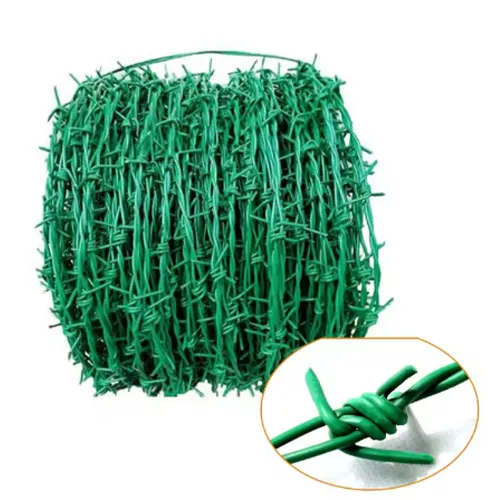
Figure 1: High-grade galvanized barbed wire in production, demonstrating precise barb attachment.
Technical Specifications and Performance Parameters
Selecting the appropriate barbed wire for sale requires a detailed understanding of its technical specifications. These parameters directly influence its performance, durability, and suitability for specific applications.
Typical Barbed Wire Specifications:
| Parameter | Description / Standard Value | Impact on Performance |
|---|---|---|
| Wire Gauge (Line Wire) | Typically 12.5 gauge (2.5mm) or 15.5 gauge (1.8mm) per ASTM A121 | Lower gauge (thicker wire) indicates higher strength and greater resistance to cutting/stretching. |
| Wire Gauge (Barb Wire) | Often 14 gauge (2.0mm) or 16 gauge (1.6mm) | Thicker barb wire resists bending and dulling, maintaining deterrent effect. |
| Number of Strands | 2-strand (double-twist) or 4-strand (Iowa) | More strands provide greater overall strength and stability. |
| Number of Points | 2-point (single barb) or 4-point (double barb) | 4-point barbs offer increased deterrence and snagging capability. |
| Barb Spacing | Typically 3, 4, 5, or 6 inches (7.5, 10, 12.5, or 15 cm) | Closer spacing increases deterrent effect but also material cost. |
| Material & Coating | Galvanized (Class 1, 2, or 3), Zinc-Aluminum (ZA), or PVC-Coated | Corrosion resistance directly impacts service life, especially in harsh environments. Higher coating classes or ZA/PVC offer superior protection. |
| Tensile Strength | High-tensile (e.g., 80,000 psi minimum) or standard (e.g., 45,000 psi) | Higher tensile strength resists cutting and stretching, making breaches more difficult. |
Performance Advantages:
Modern barbed wire offers significant advantages in typical application scenarios:
- Corrosion Resistance: Heavy galvanization (Class 3 or higher) or PVC coatings ensure exceptional resistance to rust and degradation, even in saline or highly humid environments, drastically reducing maintenance costs and extending infrastructure lifespan. This is critical for petrochemical facilities, coastal installations, and water supply & drainage systems.
- Energy Saving (Deterrence): By providing an immediate physical and psychological barrier, barbed wire systems significantly deter unauthorized entry attempts, reducing the reliance on active security measures such as extensive patrols or advanced electronic surveillance, thereby contributing to operational energy savings.
- Cost-Effectiveness: Compared to other high-security fencing options, barbed wire offers an unparalleled balance of initial investment and long-term security value. Its simplicity in installation and minimal maintenance requirements translate into substantial cost efficiencies over the product's service life.
Application Scenarios and Real-World Case Studies
The versatility of `barbed wire` extends across a multitude of industries, providing essential perimeter security in diverse and challenging environments. Its effectiveness is proven in critical infrastructure protection, industrial complexes, and agricultural settings.
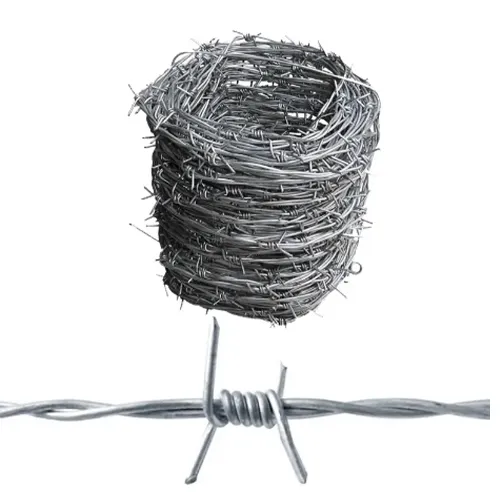
Figure 2: Barbed wire installed as part of a high-security perimeter fence for industrial protection.
Target Industries:
- Petrochemical Facilities: High-security perimeters around refineries, storage tanks, and pipelines demand robust physical barriers to prevent sabotage and unauthorized access. Galvanized and PVC-coated barbed wire excels here due to its corrosion resistance against chemical vapors and harsh atmospheric conditions.
- Metallurgy & Mining: Securing valuable assets, machinery, and restricted zones within mining operations and metallurgical plants. The wire's resilience against physical force and environmental degradation is critical.
- Water Supply & Drainage Systems: Protecting reservoirs, pumping stations, and water treatment plants from vandalism or contamination, ensuring public health and utility service continuity. The ability to withstand constant moisture is key.
- Military & Correctional Facilities: Used as primary or secondary containment, often in conjunction with `chain link barbed wire` and `razor wire for sale`, to establish highly secure zones and deter escape or intrusion.
- Agriculture & Livestock Management: Cost-effective perimeter fencing for large land areas, protecting crops from wildlife and containing livestock.
- Commercial & Industrial Parks: Enhancing the security of warehouses, manufacturing plants, and storage yards, providing a visible deterrent against theft and unauthorized entry.
Application Case Studies:
-
Case Study 1: Border Security Enhancement (Southeast Asia)
A national border patrol agency sought to upgrade several hundred kilometers of its perimeter fence. The challenge was to implement a durable, high-deterrence solution capable of withstanding extreme monsoon conditions and resisting persistent intrusion attempts. Our firm supplied heavy-gauge, Class 3 galvanized `barbed wire` with 4-point barbs at 3-inch spacing, integrated atop existing `chain link barbed wire` fencing. The selection was based on its superior corrosion resistance and high tensile strength. After two years of deployment, the agency reported a 45% reduction in successful incursions and minimal maintenance requirements, attesting to the material's longevity and deterrent effect even in corrosive coastal regions.
-
Case Study 2: Solar Farm Perimeter Protection (North America)
A large-scale solar power generation facility faced issues with opportunistic theft of copper cabling and minor vandalism. The vast perimeter required an economical yet effective security upgrade. We provided PVC-coated `barbed wire` in a dark green finish, harmonizing with the natural landscape, installed on cantilevered arms atop a standard `chain link barbed wire` fence. The PVC coating offered enhanced protection against UV degradation and improved aesthetic integration. Customer feedback confirmed a significant drop in security incidents, highlighting the dual benefits of effective deterrence and extended product life in open-field applications.
Vendor Comparison and Selection Criteria for Barbed Wire Suppliers
When sourcing barbed wire for sale, a strategic approach to vendor selection is paramount to ensure quality, compliance, and long-term value. Key criteria extend beyond mere price, encompassing manufacturing capabilities, quality assurance, and service reliability.
Critical Comparison Factors:
| Criterion | Description & Importance |
|---|---|
| Certifications & Compliance | Verify ISO 9001 (Quality Management) and adherence to ASTM A121, ASTM A641, and other relevant national standards. Ensures consistent product quality and reliability. |
| Material Sourcing & Quality | Inquire about the origin and quality of raw steel wire and zinc/PVC coatings. Reputable vendors use certified suppliers for raw materials. |
| Manufacturing Expertise | Assess manufacturing precision, especially for barb formation and spacing uniformity. Automated production lines often indicate higher consistency. |
| Product Range & Customization | A broad portfolio (various gauges, coatings, barb types, roll lengths) and ability to offer customized solutions are advantageous for specific project needs. |
| Logistics & Lead Time | Evaluate lead times, shipping capabilities, and packaging quality. Timely delivery and secure transit are crucial for project schedules. |
| Warranty & After-Sales Support | Robust product warranties (e.g., 5-10 years for coating integrity) and responsive customer support are indicators of a trustworthy partner. |
| Client References & Experience | Experience with similar-scale projects and positive client testimonials (especially from target industries) validate a vendor's capabilities. |
Our company, with over [e.g., 20] years of dedicated service in the wire mesh industry, holds ISO 9001 certification and has partnered with numerous global leaders in petrochemical, defense, and public utilities. This extensive experience underscores our commitment to authoritativeness and trustworthiness in providing high-grade `barbed wire` and `razor wire for sale` solutions.
Customized Barbed Wire Solutions
While standard products meet most requirements, certain projects necessitate bespoke `barbed wire` configurations. Our capabilities extend to providing highly customized solutions to meet unique security demands, environmental conditions, or project specifications.
Customization Options Include:
- Wire Gauge and Strand Count: Tailoring line and barb wire gauges for specific strength requirements or threat levels.
- Barb Configuration and Spacing: Customizing the number of points (2-point or 4-point) and the interval between barbs to optimize deterrence.
- Coating Types: Offering specialized coatings beyond standard galvanization, such as Zinc-Aluminum (Zn-Al) for extended corrosion resistance in extremely harsh conditions, or custom PVC colors for aesthetic integration.
- Roll Lengths and Packaging: Providing specific roll lengths to minimize waste during large-scale installations and customized packaging for easier handling or deployment in remote locations.
- Hybrid Systems: Engineering integrated solutions that combine `barbed wire` with other security elements like `chain link barbed wire` or security mesh, often pre-fabricated for rapid on-site assembly.
Our technical team works closely with clients from conceptual design through to production, ensuring that all customized barbed wire for sale solutions meet precise performance criteria and regulatory standards.
Frequently Asked Questions (FAQ)
Q1: What is the typical lead time for large orders of barbed wire for sale?
A1: Lead times vary based on order volume, customization requirements, and current production schedules. For standard products, typical lead times range from 2-4 weeks. For large or highly customized orders, this can extend to 6-8 weeks. We provide detailed lead time estimates at the time of quotation.
Q2: What is the warranty on your barbed wire products?
A2: We offer a comprehensive warranty against manufacturing defects and for the integrity of the galvanization or PVC coating. Standard galvanized products typically carry a 5-year warranty against red rust, while Class 3 galvanized and PVC-coated products may extend to 10-15 years, depending on specific product lines and environmental conditions. Full warranty details are provided with each quotation.
Q3: Can you assist with technical specifications for project tenders?
A3: Absolutely. Our technical support team is highly experienced in preparing detailed product specifications, compliance documentation, and engineering recommendations for tender submissions. We ensure all information meets industry standards and client requirements.
Q4: What are the differences between barbed wire and razor wire?
A4: While both serve as deterrents, `barbed wire` features twisted strands with sharp points, primarily causing entanglement and minor injuries. `Razor wire for sale`, conversely, consists of stamped metal strips with extremely sharp blades designed to inflict more severe injury, providing a significantly higher level of deterrence and physical barrier. Razor wire is typically used in higher security applications.
Logistics, Fulfillment, and Customer Support
Our commitment extends beyond providing superior `barbed wire` products; we ensure a seamless procurement and fulfillment experience.
Fulfillment Details:
We operate an efficient global logistics network, capable of handling large-volume orders and delivering to diverse international locations. Our packaging is designed to protect products during transit, minimizing damage and facilitating easy handling on-site. We offer various shipping options, including sea freight, air cargo, and land transport, tailored to meet project timelines and budgetary constraints. Detailed shipping manifests and tracking information are provided for all orders.
After-Sales Support:
Our dedicated customer support team is available to assist with any post-purchase inquiries, technical guidance, or warranty claims. We pride ourselves on responsive and knowledgeable service, ensuring client satisfaction throughout the product lifecycle. From installation advice to material care recommendations, our experts are on hand to provide the necessary support.
Conclusion
The strategic implementation of high-quality `barbed wire` remains a cornerstone of effective physical perimeter security across numerous B2B sectors. From understanding the intricate manufacturing process and adhering to stringent quality standards to leveraging specialized types like `razor wire for sale` and integrated `chain link barbed wire` systems, this guide underscores the technical depth required for optimal security solutions. By prioritizing factors such as material durability, corrosion resistance, and reliable vendor partnerships, businesses can ensure long-term protection for their critical assets and infrastructure. We are committed to providing expert guidance and superior `barbed wire for sale` solutions that meet the evolving demands of global security.
References
- ASTM A121/A121M - 13(2018) Standard Specification for Metallic-Coated Carbon Steel Barbed Wire. ASTM International.
- ISO 9001:2015 Quality management systems — Requirements. International Organization for Standardization.
- "Perimeter Security Market Size, Share & COVID-19 Impact Analysis." Fortune Business Insights, 2023.
- "Fence Materials: A Guide to Options for Every Need." American Fence Association.
- "Corrosion Protection of Steel Structures." National Association of Corrosion Engineers (NACE International).
-
Quality Black Wire Clothes Hangers for Home and Retail UseNewsApr.16,2026
-
Premium Rose Gold Wire Hangers for Luxury Closet OrganizationNewsApr.09,2026
-
Elevate Your Closet with Stylish Rose Gold Metal Coat HangersNewsApr.07,2026
-
Optimize Your Business with Durable White Wire Clothes HangersNewsApr.04,2026
-
Comprehensive Guide to Buy Wire Clothes Hangers for Optimal Closet OrganizationNewsMar.31,2026
-
Find the Best Deals and Options to Buy Wire Hangers for All Your NeedsNewsMar.28,2026
-
Find the Best Deals to Buy Wire Coat Hangers for Your NeedsNewsMar.26,2026