-
 Phone:
 -
 Email:
Durable Barbed Wire For Sale | Secure Fencing & Razor Wire Options
Strategic Perimeter Security: An In-Depth Look at Barbed Wire Solutions
In today's complex security landscape, robust perimeter defense remains a fundamental requirement for industrial, agricultural, and high-security installations. Barbed wire, a time-tested and highly effective deterrent, continues to play a pivotal role. This comprehensive guide delves into the specifics of barbed wire for sale, exploring its technical specifications, manufacturing processes, diverse applications, and critical factors for procurement. We aim to provide B2B decision-makers and engineers with the authoritative insights necessary to make informed choices for their security infrastructure. From basic agricultural fencing to advanced industrial security, understanding the nuances of this essential product is key to ensuring reliable and cost-effective protection.
Industry Trends in Perimeter Security Solutions
The perimeter security industry is undergoing significant evolution, driven by increasing demands for enhanced protection against intrusion, theft, and vandalism. While traditional barriers like fences and gates remain foundational, there's a growing emphasis on integrated systems that combine physical deterrence with electronic surveillance and access control. Trends include:
- Integration with Smart Security Systems: Barbed wire and razor wire for sale are increasingly deployed as a primary physical barrier, often complemented by CCTV cameras, motion sensors, and even drone surveillance for comprehensive monitoring.
- Sustainability and Longevity: Demand for products with extended service life and minimal environmental impact is rising. This translates to a preference for high-grade galvanized or PVC-coated barbed wire, offering superior corrosion resistance and reduced maintenance cycles.
- Customization and Specialty Solutions: Clients require tailor-made solutions for specific threat levels and environmental conditions, leading to diverse specifications in wire gauge, barb configuration, and coating types.
- Enhanced Deterrence: Beyond simple fencing, there's a trend towards incorporating more aggressive deterrents, such as concertina razor wire for sale or multi-strand barbed wire installations, particularly in critical infrastructure and high-risk zones.
These trends highlight the enduring relevance of high-quality barbed wire as a cost-effective and critical component of any layered security strategy.
The Meticulous Manufacturing Process of Barbed Wire
The production of high-quality barbed wire involves a series of precisely controlled steps designed to ensure durability, strength, and effective deterrence. Unlike processes such as casting or forging, barbed wire manufacturing is primarily a wire drawing, coating, and twisting operation.
Process Flow Overview:
- Wire Rod Sourcing: High-carbon steel wire rods, typically SAE 1006 or similar grades, are selected for their optimal balance of tensile strength and ductility.
- Wire Drawing: The wire rods undergo a cold drawing process, reducing their diameter to the desired gauge (e.g., 12.5 gauge, 14 gauge). This process significantly increases the wire's tensile strength.
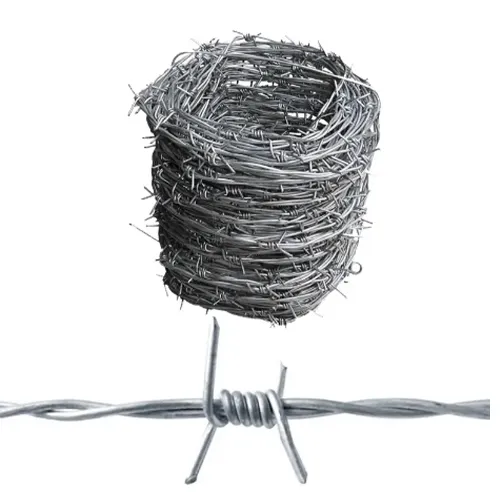
- Galvanization: To impart superior corrosion resistance, the drawn wire is hot-dip galvanized. This involves immersing the wire in molten zinc, creating a metallurgically bonded protective layer. The zinc coating thickness, measured in g/m² or microns, is critical for service life, with heavy galvanization often exceeding 240 g/m² (ISO 1461/ASTM A123 standards). For specific applications, electro-galvanization or PVC coating over galvanization may be applied.
- Twisting Machine Operation: Specialized barbed wire machines feed two (or more) line wires and smaller barb wires. The barb wire is cut, twisted around the line wires at specific intervals (e.g., 4 points, 5 inches apart), and then the entire assembly is twisted together. Common twist patterns include traditional (continuously twisted line wires) and reverse twist (line wires twist in opposite directions after each barb, enhancing strength and preventing unraveling if cut).
- Spooling and Packaging: The finished barbed wire is wound onto spools or reels of predetermined lengths (e.g., 500 feet, 1320 feet) and securely packaged for transport.
- Quality Control & Testing: Throughout the process, rigorous testing is conducted. This includes:
- Tensile Strength Test: To ensure the wire meets specified breaking load requirements (e.g., ASTM A121).
- Galvanization Adhesion and Thickness Test: To verify the zinc coating's integrity and longevity.
- Barb Uniformity and Spacing: To confirm consistent deterrence.
- Dimensional Accuracy: Gauge, roll length, and overall conformity to ISO 9001 standards.
This meticulous process ensures that the final product offers extended service life, typically 10-25 years depending on coating and environmental conditions, and demonstrates superior advantages in typical application scenarios such as excellent corrosion resistance and minimal maintenance, leading to energy saving over the product lifecycle. Target industries include petrochemical, metallurgy, water supply & drainage, agriculture, and defense.
Technical Specifications and Types of Barbed Wire
Understanding the technical specifications of barbed wire for sale is crucial for selecting the appropriate product for specific security requirements. Key parameters include wire gauge, barb configuration, material composition, and coating type.
Common Types of Barbed Wire:
- Single-Strand Barbed Wire: Less common for high-security, primarily used for temporary fencing or light agricultural use.
- Double-Strand Barbed Wire: The most prevalent type.
- Traditional Twist: Line wires are twisted continuously in one direction.
- Reverse Twist: Line wires are twisted in opposite directions, providing superior strength and preventing unraveling, making it ideal for robust security.
- Razor Wire (Concertina Wire): While distinct from traditional barbed wire, razor wire for sale offers a significantly higher deterrent and barrier effect. It consists of a central strand of high tensile wire onto which razor-sharp blades are crimped at close intervals. Available in flat wrap, coiled, or welded mesh forms.
Key Specifications Table for Galvanized Barbed Wire:
| Parameter | Standard (e.g., ASTM A121) | Typical Range/Value | Description |
|---|---|---|---|
| Wire Gauge (Line Wire) | 12.5 ga, 14 ga | 12.5 gauge (2.5mm), 14 gauge (2.0mm) | Determines wire thickness and overall strength. Lower gauge means thicker wire. |
| Wire Gauge (Barb Wire) | 14 ga, 15.5 ga | 14 gauge (2.0mm), 15.5 gauge (1.8mm) | Thickness of the sharp barbs. |
| Barb Spacing | ASTM A121-01 | 3 inches (7.5 cm), 4 inches (10 cm), 5 inches (12.5 cm) | Distance between barb clusters. Shorter spacing increases deterrence. |
| Barb Configuration | 2-point, 4-point | 4-point is standard for security, 2-point for lighter applications. | |
| Material | High-Carbon Steel | Low Carbon Steel (LCS), High Carbon Steel (HCS) | HCS offers higher tensile strength and cut resistance. |
| Surface Treatment | ASTM A123 (Hot-dip Galvanized) | Hot-dip Galvanized, Electro Galvanized, PVC Coated | Protects against corrosion; Hot-dip offers superior longevity. |
| Tensile Strength (Line Wire) | ASTM A121-01 Class 1/2/3 | Minimum 80,000 psi (550 MPa) for HCS | Resistance to breaking under tension. Higher is better for security. |
| Roll Length | Standard | 200m (656 ft), 250m (820 ft), 400m (1312 ft) | Common lengths for installation efficiency. |
Diverse Application Scenarios
The versatility of barbed wire allows its deployment across a multitude of sectors, addressing diverse security and containment needs. Its effectiveness stems from its low cost, ease of installation, and formidable deterrent capabilities.
- Agricultural Sector: Essential for livestock containment (cattle, sheep) and defining property boundaries. Its primary role here is to prevent animal escape and deter unauthorized entry onto farmland.
- Industrial Facilities: Perimeter security for factories, warehouses, construction sites, and storage depots. Here, barbed wire acts as a significant deterrent against theft, vandalism, and unauthorized access, protecting valuable assets and sensitive operations.
- Military & High-Security Zones: Critical for border control, military installations, prisons, detention centers, and government facilities. Often used in conjunction with high-security fencing like chain link barbed wire, creating an almost impenetrable barrier. The robust nature and anti-climb properties are paramount here.
- Critical Infrastructure: Protection for power plants, water treatment facilities, railway lines, airports, and communication hubs. These sites require resilient security against sabotage and terrorism, where the corrosion resistance of galvanized barbed wire ensures long-term integrity in exposed environments.
- Residential & Commercial Properties: While less common for primary residential use, it can be found securing large estates, secluded commercial properties, and junkyards to prevent trespassing.
In all these scenarios, the objective is consistent: to create a physical and psychological barrier that deters intrusion, manages movement, and enhances overall security posture. The choice of types of barbed wire, from standard galvanized to PVC-coated or enhanced razor wire, depends on the specific threat assessment and environmental conditions.
Technical Advantages and Performance Metrics
The enduring relevance of barbed wire stems from its compelling technical advantages and robust performance metrics, making it a preferred choice for a wide array of perimeter security applications.
- Exceptional Deterrence: The sharp barbs and taut wires create a formidable physical and psychological barrier. Its anti-climb properties significantly hinder unauthorized entry, causing discomfort or injury to intruders.
- Cost-Effectiveness: Compared to advanced electronic security systems or heavier duty fencing, barbed wire offers a highly economical solution for securing large perimeters. Its low initial cost combined with minimal maintenance requirements makes it a budget-friendly option.
- Ease and Speed of Installation: Barbed wire is relatively lightweight and can be rapidly installed using standard tools and techniques, attaching directly to existing fence posts, chain link fences, or specialized barbed wire arms.
- Durability and Longevity: High-quality galvanized barbed wire, meeting ASTM A121 standards for coating weight, exhibits superior resistance to rust, corrosion, and environmental degradation. This ensures a prolonged service life, even in harsh weather conditions, significantly reducing the need for frequent replacement or repair. PVC-coated options further enhance this resistance in highly corrosive environments.
- Versatility: It can be deployed in single, double, or multiple strands, or integrated with other fencing types such as chain link barbed wire, to customize the level of security required for any given application.
- Low Maintenance: Once installed, galvanized barbed wire requires minimal upkeep, typically limited to occasional inspections for damage or sagging. This reduces operational overheads significantly.
These advantages underscore why barbed wire continues to be a cornerstone of effective perimeter security, offering a reliable blend of performance, durability, and economic viability.
Vendor Comparison and Selection Criteria
Choosing the right supplier for barbed wire for sale is as critical as selecting the product itself. A reliable vendor ensures consistent product quality, adherence to specifications, and dependable service. B2B decision-makers should consider the following criteria:
- Material Quality and Standards: Verify that the vendor uses high-grade steel and galvanization processes that meet international standards like ASTM A121 and ISO 9001. Request material test certificates.
- Manufacturing Expertise: Assess their manufacturing capabilities, including the technology used for wire drawing, galvanization, and twisting to ensure consistent barb spacing and wire tension.
- Product Range and Customization: A comprehensive product portfolio, including various wire gauges, barb types, coatings, and roll lengths, indicates a versatile supplier. The ability to provide customized solutions for unique project requirements is a significant advantage.
- Certifications and Compliance: Look for certifications such as ISO 9001 for quality management, and adherence to relevant industry standards like ASTM, ensuring product reliability and safety.
- Reputation and Experience: Partner with vendors who have a proven track record, positive customer feedback, and years of experience in the wire mesh and fencing industry. Ask for client references or case studies.
- Lead Time and Logistics: Evaluate their capacity to meet delivery schedules, especially for large orders. Efficient logistics and global shipping capabilities are crucial for international procurement.
- Warranty and After-Sales Support: A reputable vendor will offer clear warranty commitments and robust after-sales support, including technical assistance and clear return/replacement policies.
Barbed Wire Product Comparison: Galvanized vs. PVC Coated
| Feature | Hot-dip Galvanized Barbed Wire | PVC Coated Barbed Wire |
|---|---|---|
| Core Material | High-carbon steel wire | High-carbon steel wire (galvanized first) |
| Corrosion Resistance | Excellent, thanks to thick zinc coating (240+ g/m²) | Superior, dual protection from galvanization and PVC layer |
| Service Life | 10-25 years, depending on environment | 15-30+ years, extended in harsh conditions |
| Environmental Impact | Zinc is recyclable, minor environmental concerns with runoff | PVC can be recycled, better chemical resistance |
| Aesthetics | Metallic silver-grey finish | Available in various colors (green, black), blends better with surroundings |
| Cost | Lower initial cost | Higher initial cost, but lower lifecycle cost in severe conditions |
| Primary Use | General perimeter security, agriculture, industrial | Coastal areas, chemical plants, aesthetically sensitive zones |
Customized Solutions for Specialized Security Needs
While standard barbed wire configurations meet many security requirements, specific projects often necessitate customized solutions to address unique environmental challenges, threat assessments, or integration with existing infrastructure. Reputable manufacturers offer extensive customization capabilities:
- Wire Gauge and Strand Configuration: Custom orders can specify heavier gauge line wires (e.g., 10 gauge) for increased cut resistance or particular strand counts (e.g., 3-strand) for enhanced anti-climb properties.
- Barb Design and Spacing: While 4-point barbs are standard, specialized barb shapes or customized spacing (e.g., closer intervals) can be engineered for heightened deterrence.
- Coating and Material Enhancements: Beyond standard hot-dip galvanization, options include:
- Heavy Galvanization (Class 3 or higher): For extreme coastal or industrial corrosive environments.
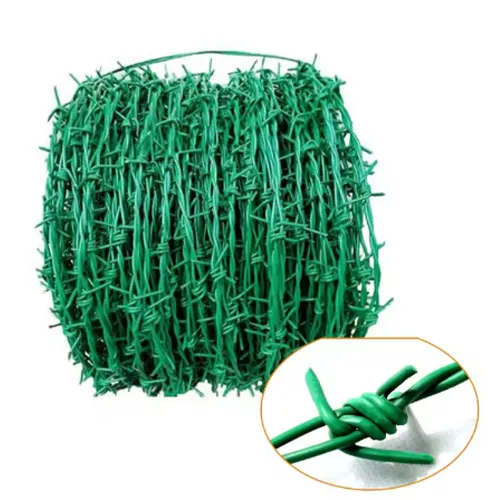
- PVC/Vinyl Coating: Applied over galvanized wire, offering superior chemical resistance and color options for aesthetic integration.
- Stainless Steel Barbed Wire: For environments requiring ultimate corrosion resistance and strength, such as marine applications or certain chemical processing plants.
- Roll Lengths and Packaging: Tailored roll lengths can optimize installation efficiency for large-scale projects, reducing waste and splicing needs. Specialized packaging for challenging terrains or remote delivery can also be arranged.
- Integration Components: Custom fabrication of barbed wire arms, tension wires, and other accessories designed for seamless integration with existing fence types (e.g., chain link, welded mesh panels).
Collaborating with experienced technical teams allows clients to design and procure barbed wire solutions that precisely match their operational needs and security objectives, optimizing both performance and cost-efficiency.
Application Case Studies
Real-world applications demonstrate the efficacy and adaptability of barbed wire in diverse challenging environments.
Case Study 1: Perimeter Security for a Petrochemical Complex
A major petrochemical facility located in a humid, industrial coastal region required an upgraded perimeter security system. The primary concerns were unauthorized entry, potential sabotage, and extreme corrosive environmental conditions.
Solution Implemented: A multi-layered system was designed, incorporating a high-security chain link barbed wire fence topped with three strands of heavy-duty, PVC-coated reverse twist barbed wire. The PVC coating, applied over thick galvanization, was specified for its superior chemical resistance and extended longevity in a corrosive salt-laden atmosphere. The barbed wire was installed on angled extensions facing outwards, maximizing its anti-climb deterrence.
Outcome: The PVC-coated barbed wire has successfully resisted degradation from both atmospheric salinity and industrial chemical exposure for over 15 years, significantly exceeding the lifespan of previous galvanized-only installations. Security breaches have been entirely eliminated, and maintenance requirements are minimal, attesting to the material's excellent corrosion resistance and robust design. Customer feedback highlighted the peace of mind provided by the system's durability and the reduced operational expenditure on fence repairs.
Case Study 2: Large-Scale Agricultural Containment in Arid Climates
A sprawling cattle ranch in an arid, high-wind region needed durable and cost-effective fencing for extensive livestock containment and property demarcation. The challenge was to install thousands of miles of fencing that could withstand harsh UV radiation, strong winds, and infrequent maintenance.
Solution Implemented: Standard 12.5 gauge, 4-point, hot-dip galvanized barbed wire (Class 3 coating) was chosen for its high tensile strength and proven longevity in dry, exposed conditions. It was installed with robust T-posts at regular intervals, leveraging its natural elasticity to absorb wind loads. Due to the vast area, procurement focused on maximizing roll length (400m/1312 ft spools) to reduce installation time and splice points.
Outcome: The fencing system has effectively contained livestock and defined property lines across thousands of acres. The Class 3 galvanization has provided exceptional resistance to rust despite intense sun exposure and occasional heavy rains, demonstrating a service life exceeding 20 years. The ranchers reported significant energy saving in terms of labor and resources due to the fence’s low maintenance demands, validating the durability and reliability of the chosen barbed wire product.
Ensuring Trustworthiness: Our Commitment to Quality and Service
In the B2B sector, trust is paramount. Our commitment extends beyond providing high-quality barbed wire for sale; it encompasses transparent processes, reliable support, and guaranteed satisfaction.
Certifications and Quality Assurance:
We adhere strictly to international quality management systems, evidenced by our ISO 9001 certification. Our products comply with relevant industry standards such as ASTM A121 (Standard Specification for Metallic-Coated Carbon Steel Barbed Wire) and ISO 1461 for hot-dip galvanized coatings. Each batch undergoes rigorous testing for tensile strength, zinc coating thickness, and barb consistency to ensure superior performance and longevity.
Warranty Commitments:
All our barbed wire products come with a comprehensive warranty against manufacturing defects and premature corrosion under normal operating conditions. The specific warranty period varies depending on the product type and coating, typically ranging from 5 to 25 years for galvanized and PVC-coated options. Detailed warranty terms are provided with each order.
Lead Time and Fulfillment:
We understand the importance of timely delivery for project continuity. Our standard lead time for most barbed wire orders is 2-4 weeks, depending on volume and customization requirements. For large-scale projects or urgent needs, expedited production and shipping options are available. Our logistics team works diligently to ensure efficient and secure global delivery.
Customer Support:
Our dedicated customer support team is available to assist with technical queries, order tracking, and any post-purchase concerns. We provide expert advice on product selection, installation guidelines, and maintenance best practices. Contact us via phone, email, or our online portal for prompt and professional assistance.
Frequently Asked Questions (FAQ) about Barbed Wire
-
Q: What is the primary difference between traditional barbed wire and razor wire?
A: Traditional barbed wire consists of two or more twisted strands of wire with sharp barbs at regular intervals, designed to deter. Razor wire, on the other hand, features a central wire with razor-sharp metal blades crimped onto it, offering a significantly higher level of physical deterrence and barrier effect. Razor wire is generally used for maximum security applications.
-
Q: How do I choose the correct wire gauge for my application?
A: Wire gauge refers to the wire's thickness; lower gauge numbers indicate thicker, stronger wire. For general agricultural fencing, 14 gauge might suffice. For high-security industrial or military applications requiring greater cut resistance and durability, 12.5 gauge or even heavier is recommended. Consider the level of threat and the expected lifespan.
-
Q: What are the benefits of PVC-coated barbed wire?
A: PVC-coated barbed wire offers superior corrosion resistance, especially in harsh environments like coastal areas or chemical plants, significantly extending its service life. It also provides a visual deterrent, comes in various colors (e.g., green, black) for aesthetic blending, and is less prone to rusting on contact, which can minimize harm to livestock in agricultural settings.
-
Q: Is installation guidance provided for barbed wire products?
A: Yes, we provide comprehensive installation guidelines and technical support to ensure proper and safe deployment of our barbed wire for sale. While professional installation is recommended, our resources aim to assist skilled personnel in achieving optimal security outcomes. We also advise on appropriate safety gear and local regulations.
Conclusion
Barbed wire, in its various forms, remains an indispensable tool for perimeter security worldwide. Its combination of robust physical deterrence, cost-effectiveness, and long-term durability makes it an intelligent investment for B2B applications ranging from agricultural containment to critical infrastructure protection. By understanding the manufacturing process, technical specifications, and application nuances, and by partnering with a reputable vendor committed to quality and service, businesses can secure reliable and effective solutions. As security demands evolve, so too does the engineering behind barbed wire, ensuring its continued relevance as a foundational component of any comprehensive security strategy.
References
- ASTM A121/A121M-01(2018) – Standard Specification for Metallic-Coated Carbon Steel Barbed Wire. ASTM International.
- ISO 9001:2015 – Quality management systems — Requirements. International Organization for Standardization.
- ISO 1461:2022 – Hot-dip galvanized coatings on fabricated iron and steel articles — Specifications and test methods. International Organization for Standardization.
- Federal Specification RR-F-191K/1F - Fencing, Wire and Post, Metal (Barbed Wire). General Services Administration.
- Rural Development, United States Department of Agriculture. Fencing Standards and Specifications.
-
Quality Black Wire Clothes Hangers for Home and Retail UseNewsApr.16,2026
-
Premium Rose Gold Wire Hangers for Luxury Closet OrganizationNewsApr.09,2026
-
Elevate Your Closet with Stylish Rose Gold Metal Coat HangersNewsApr.07,2026
-
Optimize Your Business with Durable White Wire Clothes HangersNewsApr.04,2026
-
Comprehensive Guide to Buy Wire Clothes Hangers for Optimal Closet OrganizationNewsMar.31,2026
-
Find the Best Deals and Options to Buy Wire Hangers for All Your NeedsNewsMar.28,2026
-
Find the Best Deals to Buy Wire Coat Hangers for Your NeedsNewsMar.26,2026