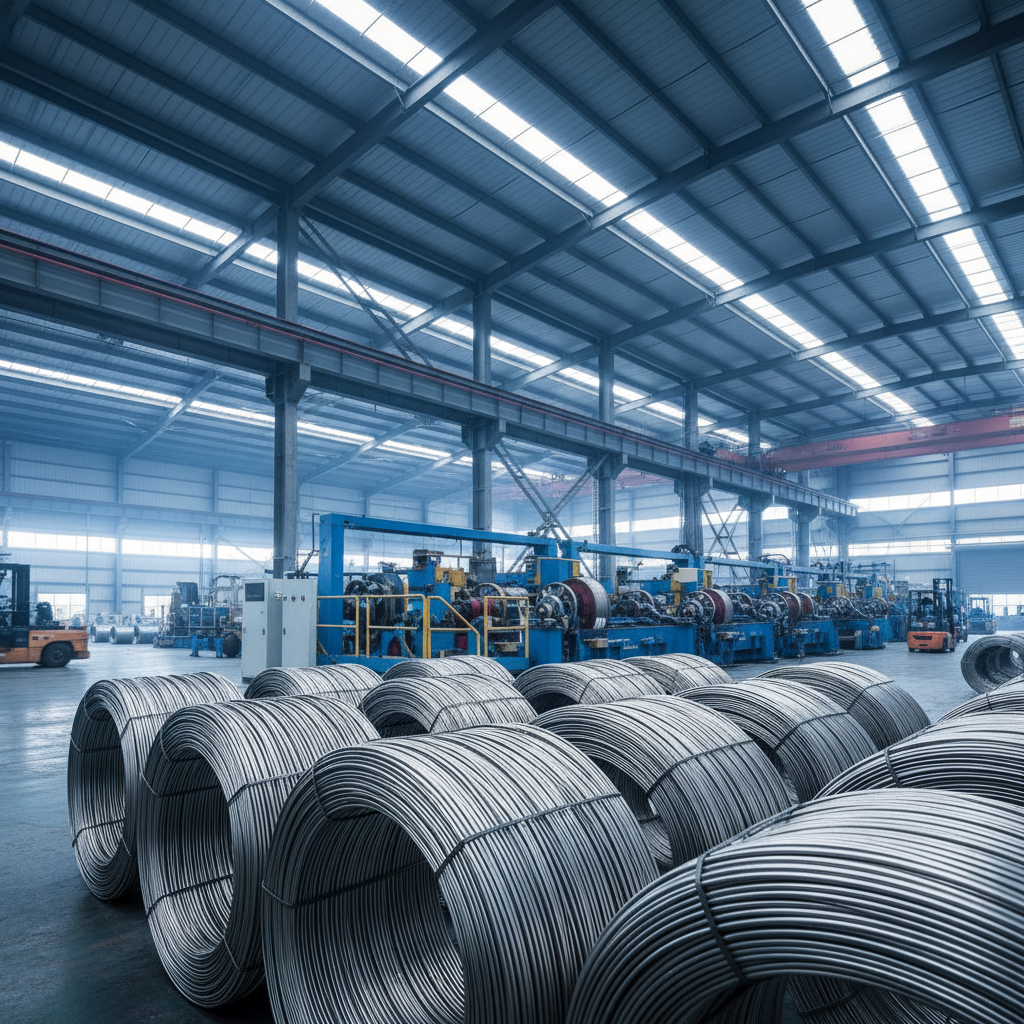


Securing high-risk perimeters requires a strategic balance between deterrent effectiveness and procurement budget, making the razor wire price a critical variable for facility managers and security engineers. In the professional metal wire products industry, pricing is rarely a flat rate; it is a reflection of metallurgical quality, coating thickness, and the specific geometry of the blade profile designed to prevent unauthorized access.
Buyers often struggle with the discrepancy between low-cost generic options and high-tensile industrial solutions, leading to premature corrosion or structural failure. Understanding the cost drivers allows procurement teams to avoid the "cheap wire trap" and instead invest in barriers that maintain their integrity in harsh environments, reducing long-term replacement costs and liability.
This analysis provides a comprehensive breakdown of the financial and technical factors influencing security wire costs, offering a decision framework to help you select the most cost-effective solution without compromising site safety.

Primary Drivers of Razor Wire Pricing

The base razor wire price is primarily dictated by the raw material cost of high-carbon steel and the complexity of the blade stamping process. Unlike standard barbed wire, razor wire requires precision machining to create the "barbs" that provide a cutting edge, meaning the energy and tooling costs per linear meter are significantly higher.
Additional price volatility stems from the diameter of the core wire and the clip spacing. A tighter coil with more frequent clips provides higher structural rigidity and is more difficult to breach, but it increases the total weight of steel required, directly inflating the unit price.
Material Grade and Corrosion Resistance
The environment where the barrier is deployed is the single biggest factor in determining which material grade—and thus which price point—is appropriate. In coastal or chemically aggressive areas, standard galvanized steel is insufficient and will lead to rapid oxidation, rendering the deterrent ineffective within a few years.
Premium options such as stainless steel (Grade 304 or 316) or thick PVC coatings offer superior longevity. While the initial razor wire price for stainless steel is substantially higher than galvanized steel, the total cost of ownership is often lower due to the near-elimination of maintenance and replacement cycles in corrosive atmospheres.
Comparing Concertina vs. Flat Wrap Costs
The physical configuration of the wire alters both the material consumption and the labor required for installation. Concertina wire, which forms a helical coil, provides a three-dimensional barrier that is highly effective for ground-level deployment. Its price is typically calculated by coil diameter and length.
Flat wrap razor wire is designed to be stretched across existing fences. Because it uses less steel per linear foot than a full concertina coil, the material cost is lower. However, the security level is also reduced, as it lacks the depth of a coil, making it more suitable for top-of-wall applications rather than primary ground barriers.
Relative Cost Impact of Technical Specifications
When evaluating quotes, it is essential to understand how specific technical adjustments shift the pricing. The following conceptual index illustrates how different specifications influence the relative cost compared to a standard galvanized baseline.
As shown in the illustrative framework, the transition to stainless steel or high-tensile alloys represents the most significant price jump, while adjustments to clip spacing or PVC color provide marginal cost changes. This suggests that buyers should prioritize material grade over minor geometric tweaks to optimize their security ROI.
Hidden Expenses in Perimeter Installation
The quoted razor wire price often only covers the material. For a complete security solution, buyers must account for the cost of support posts, tensioning wires, and specialized safety equipment for installers. Improperly tensioned wire can sag, creating gaps that diminish the security value of the investment.
Furthermore, the logistics of transporting large concertina coils can be expensive due to their bulk and the hazardous nature of the product. Shipping costs and site preparation—such as clearing debris or installing concrete footings—can sometimes add 20-30% to the overall project budget.
Common Budgeting Mistakes in Security Fencing
A frequent error in procurement is selecting the lowest razor wire price without verifying the zinc coating weight (GSM). A lower price often indicates a thinner galvanized layer, which leads to premature rusting in humid climates, forcing a total system replacement much sooner than expected.
Another mistake is failing to match the wire type to the threat level. Using low-cost flat wrap in a high-security zone results in a "security theater" effect—the barrier looks intimidating but can be bypassed with basic tools, meaning the initial "saving" is actually a loss in risk mitigation.
Procurement Framework for Industrial Wire
To ensure the best value, procurement should be based on a weighted matrix of environment, threat level, and lifespan. The following table provides a qualitative comparison of common security wire approaches to guide your decision process.
| Option | Cost Driver | Best Use Case | Main Risk |
|---|---|---|---|
| Galvanized Steel | Low/Standard | Dry, Inland Areas | Rapid Corrosion |
| PVC Coated | Moderate | Industrial Sites | Coating Tears |
| Stainless Steel | High | Coastal/Marine | High Initial CapEx |
| Concertina Coil | Weight/Dia | Ground Perimeters | Installation Complexity |
| Flat Wrap | Linear Length | Top of Wall | Lower Deterrence |
| High-Tensile Alloy | Material Tech | Military/High-Sec | Sourcing Lead Times |
By aligning the material selection with the site's specific environmental stressors, buyers can justify a higher initial razor wire price by calculating the extension of the asset's lifecycle.
Frequently Asked Questions
The most significant fluctuations are driven by the global price of raw steel and the choice of coating. Stainless steel options are considerably more expensive than galvanized steel, and surges in zinc prices can also impact galvanized wire costs.
Yes, PVC-coated wire is generally more expensive because it requires an additional manufacturing step (the coating process) and additional raw materials. However, it provides better weather resistance in many industrial settings.
Larger diameter coils require more wire per linear meter of the finished barrier. This increases the total weight of the steel used, which directly increases the price per coil.
While wider spacing may slightly reduce material costs, it significantly weakens the structural integrity of the coil, making it easier for intruders to compress or move the wire. It is generally not recommended for high-security zones.
Flat wrap is typically more cost-effective for top-of-fence applications due to lower material usage and easier installation. Concertina is more expensive but provides a much higher level of deterrence.
Check the technical specifications for the zinc coating weight (GSM) and the core wire tensile strength. If these values are significantly lower than industry standards, the low price is likely a result of inferior materials that will fail prematurely.
Conclusion
The true value of a perimeter barrier is not found in the lowest initial razor wire price, but in the relationship between the material's lifespan and the security risks it mitigates. By prioritizing high-grade coatings and appropriate configurations—such as stainless steel for coastal areas or concertina coils for ground defense—organizations can avoid the recurring costs of failure and maintenance.
For those evaluating technical specifications and procurement options for industrial-grade security barriers, detailed product information and custom configuration guidance are available at www.wiremeshpro.com to help ensure your investment meets long-term safety requirements.