Double loop rebar tie wire plays a crucial, often unseen, role in modern construction globally. It's the unsung hero ensuring the structural integrity of everything from residential buildings to towering skyscrapers and vital infrastructure. The demand for reliable and efficient rebar tying solutions is consistently high due to the expanding global population and the continuous need for robust, safe, and long-lasting structures. This demand is further fueled by a growing emphasis on construction speed and cost-effectiveness.
The importance of double loop rebar tie wire extends beyond simply holding rebar in place. It directly impacts the overall strength and durability of reinforced concrete structures, influencing their resistance to seismic activity, weathering, and general wear and tear. As urbanization accelerates, particularly in developing nations, the need for dependable materials like this increases exponentially. The use of quality tie wire is paramount to minimizing structural failures and ensuring public safety.
Understanding the nuances of double loop rebar tie wire – its materials, applications, and best practices – is essential for anyone involved in the construction industry. It's not merely a commodity; it’s a critical component of safe, sustainable, and economical construction projects worldwide. Properly selected and applied tie wire significantly contributes to the longevity and resilience of concrete structures, protecting significant investments.
The Foundation of Structural Integrity: double loop rebar tie wire
The fundamental purpose of double loop rebar tie wire is to securely fasten rebar together before concrete is poured, creating a rigid framework that resists tensile stress. Without effective tie wire, the rebar would shift during the concrete pouring process, compromising the structural integrity of the finished product. Choosing the right gauge and material for the application is critical.
The strength and ductility of double loop rebar tie wire directly impact the stability of concrete structures. Using high-quality tie wire ensures a reliable connection, preventing slippage and maintaining the intended reinforcement pattern. This preventative measure ultimately reduces the risk of cracks, failures, and costly repairs down the line. You can find quality double loop rebar tie wire to ensure a safe build.
Global Relevance and Construction Challenges
Construction is a global industry, and the demand for robust, reliable materials is universal. From rapidly developing urban centers in Asia to large-scale infrastructure projects in Europe and North America, double loop rebar tie wire is indispensable. The United Nations estimates that over half the world’s population lives in urban areas, a figure projected to increase to 68% by 2050, significantly increasing the need for safe and efficient construction practices.
One significant challenge facing the construction industry is the increasing pressure to reduce costs without sacrificing quality or safety. This often leads to the temptation to use lower-grade materials, including tie wire. However, this can have devastating consequences, potentially leading to structural failures and safety hazards. Proper selection of double loop rebar tie wire is crucial.
Furthermore, sustainability is becoming a major focus in construction. Reducing waste, using eco-friendly materials, and minimizing the environmental impact of projects are all priorities. While tie wire itself is a relatively small component of a larger project, choosing recyclable or sustainably sourced materials can contribute to a more responsible building process.
Defining double loop rebar tie wire: A Closer Look
double loop rebar tie wire is a specialized type of wire specifically designed for securely fastening rebar (reinforcing bar) together within concrete structures. Unlike standard binding wire, double loop tie wire features a pre-formed loop on each end, allowing for faster and more secure tying with minimal effort. This makes it significantly more efficient than manual tying methods.
Its connection to modern industry and humanitarian needs is profound. The speed and efficiency it offers are vital for large-scale construction projects, allowing for faster completion times and reduced labor costs. In disaster relief scenarios, quick and reliable rebar tying is essential for constructing emergency shelters and infrastructure. The efficiency of using quality double loop rebar tie wire is highly advantageous.
Typically manufactured from annealed steel, double loop tie wire offers excellent ductility and tensile strength. The annealing process makes the wire soft and pliable, allowing it to be easily bent and twisted around the rebar without snapping. Properly formed loops ensure a tight and secure connection, resisting movement and maintaining the structural integrity of the rebar cage.
Core Characteristics of Superior Tie Wire
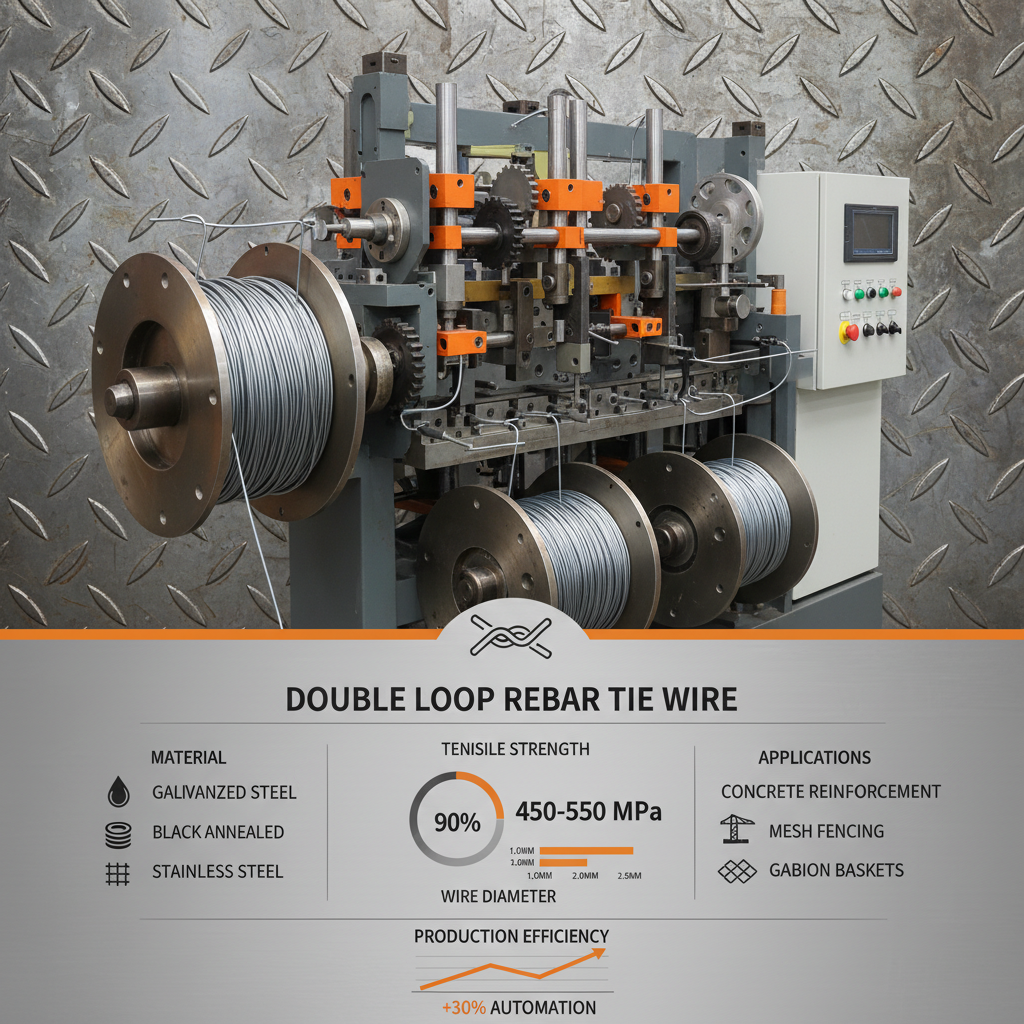
When evaluating double loop rebar tie wire, several key characteristics are critical. First, Tensile Strength is paramount. The wire must be able to withstand significant pulling force without breaking, ensuring a secure hold on the rebar. Second, Ductility allows the wire to bend and conform to the rebar without snapping, facilitating easy and reliable tying.
Third, Corrosion Resistance is vital for long-term durability, particularly in exposed concrete structures. Galvanized or stainless steel tie wire offers superior protection against rust and corrosion. Fourth, Consistent Loop Formation ensures that each wire provides a uniformly secure connection. Variations in loop size or shape can compromise the integrity of the tie.
double loop rebar tie wire Performance Metrics
Applications Across Industries and Geographies
double loop rebar tie wire is ubiquitous in the construction of bridges, tunnels, highways, and various building types. In post-disaster relief operations, it's used to quickly erect temporary shelters and essential infrastructure. Specific regions with booming construction industries, such as Southeast Asia and parts of Africa, rely heavily on efficient rebar tying solutions.
The mining industry also utilizes rebar for ground support and stabilization, requiring reliable tie wire to secure the reinforcing steel. Similarly, in the precast concrete industry, double loop rebar tie wire is crucial for assembling formwork and creating pre-stressed concrete elements. Remote industrial zones, where access to skilled labor is limited, particularly benefit from the speed and ease of use of this type of tie wire.
The Long-Term Value Proposition
Investing in high-quality double loop rebar tie wire translates to significant long-term cost savings. Reducing the risk of structural failures minimizes the need for expensive repairs or replacements. Increased construction speed translates to reduced labor costs and faster project completion.
Beyond the financial benefits, the use of reliable tie wire enhances the safety and durability of structures, protecting lives and preserving investments. From a sustainability perspective, selecting corrosion-resistant materials reduces the environmental impact associated with repairs and replacements. The peace of mind that comes with knowing a structure is built to last is invaluable.
Future Trends and Innovations in Rebar Tying
Automation is beginning to play a larger role in rebar tying, with robotic systems designed to significantly increase efficiency and reduce labor costs. These automated systems often require specialized tie wire optimized for machine application.
The development of new materials with enhanced corrosion resistance and tensile strength is also underway. Research into biodegradable tie wire solutions is exploring environmentally friendly alternatives. The integration of digital technologies, such as Building Information Modeling (BIM), is enabling more precise rebar placement and optimized tie wire usage.
Furthermore, the growing emphasis on sustainable construction practices is driving demand for tie wire manufactured from recycled materials and with reduced carbon footprints. Companies like double loop rebar tie wire are consistently pushing innovation in this space to meet these evolving demands.
Summary of Solutions to Common Challenges in double loop rebar tie wire Application
| Challenge |
Solution Type |
Specific Implementation |
Expected Outcome |
| Low Tensile Strength |
Material Upgrade |
Switch to high-carbon steel tie wire |
Increased structural integrity |
| Corrosion in Coastal Environments |
Protective Coating |
Utilize galvanized or stainless steel tie wire |
Extended lifespan of structures |
| Inconsistent Loop Quality |
Quality Control |
Implement rigorous inspection processes |
Enhanced tying reliability |
| Slow Tying Speed |
Automation |
Employ robotic rebar tying systems |
Reduced labor costs and faster project completion |
| Material Waste |
Optimized Ordering |
Precise material estimation and ordering |
Reduced waste and environmental impact |
| Difficult Access |
Lightweight Materials |
Use lighter gauge tie wire when appropriate |
Improved maneuverability in tight spaces |
FAQS
For most general construction applications, 16-gauge double loop rebar tie wire is the industry standard. It provides a good balance of strength, ductility, and cost-effectiveness. However, for larger rebar sizes or structures subject to high stress, a heavier gauge, such as 14-gauge, may be necessary. Consider consulting with a structural engineer to determine the optimal gauge for your specific project needs.
To prevent corrosion, store double loop rebar tie wire in a dry, indoor environment. Avoid exposure to moisture, humidity, and direct sunlight. If the wire is stored outdoors, cover it with a waterproof tarp or container. Consider using corrosion-resistant tie wire, such as galvanized or stainless steel, for projects in harsh environments.
Annealed tie wire is heated and cooled slowly, making it softer and more pliable, which is ideal for easy bending and tying. Unannealed tie wire is harder and less flexible, making it more difficult to work with. For rebar tying, annealed tie wire is almost always preferred due to its ease of use and reduced risk of breakage.
The amount of tie wire needed varies depending on the size and complexity of the project. A rough estimate is 1-2 pounds of tie wire per cubic yard of concrete. However, it’s always best to overestimate slightly to avoid running out during the tying process. Accurate project planning and estimation can help minimize waste and ensure you have enough material.
While technically possible, reusing double loop rebar tie wire is generally not recommended. Once the wire has been bent and twisted around the rebar, its structural integrity is compromised. Reusing it can lead to a weaker connection and potentially compromise the safety of the structure. It’s best to use fresh wire for each tying application.
Always wear appropriate personal protective equipment (PPE), including gloves, safety glasses, and sturdy footwear. Be careful when handling the wire to avoid cuts or abrasions. Use tie wire pliers or a tie wire tool to make the tying process easier and safer. Avoid over-tightening the wire, which can cause it to break.
Conclusion
In conclusion, double loop rebar tie wire is a foundational element of modern construction, playing a critical role in ensuring the structural integrity, safety, and longevity of buildings and infrastructure worldwide. Its reliability, ease of use, and cost-effectiveness make it an indispensable material for construction professionals. Understanding its properties and proper application is paramount to achieving successful and durable construction projects.
Looking ahead, advancements in materials science, automation, and sustainable practices will continue to shape the future of rebar tying. By embracing innovation and prioritizing quality, the construction industry can further enhance the performance and sustainability of concrete structures for generations to come. For reliable, high-quality double loop rebar tie wire and expert advice, visit our website today.

 Phone:
 Email: