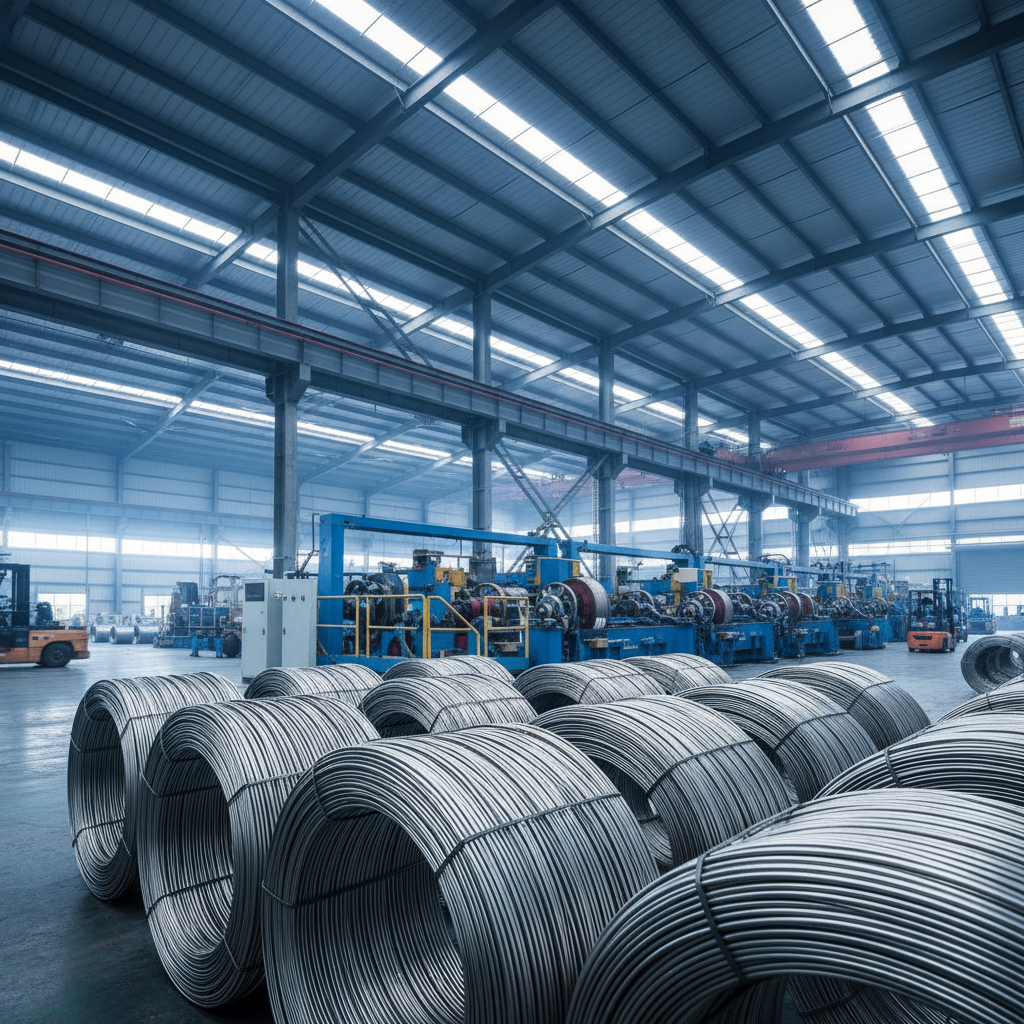
You know, I've been running around construction sites for years, dealing with materials day in and day out. Lately, everyone's talking about 'smart' everything. Smart rebar, smart concrete… honestly, it's a bit much. But there’s a real push for more efficient binding, and that's where baling wire for sale really comes into play. It’s a simple thing, a really simple thing, but it’s the backbone of a lot of what we do. It’s the unsung hero, you could say.
Have you noticed how much stuff gets wasted these days? Materials, time, money… it’s crazy. Good baling wire can actually cut down on waste, believe it or not. By securing things properly, you reduce the chance of collapses, returns, and just general mess. And that impacts the bottom line, even if people don't realize it. It’s not glamorous work, but someone’s got to make sure things hold together.
It’s funny, you design something beautiful on paper, but the real test is always on the job site. I encountered this at a prefabrication factory last time - they were using some fancy, high-tensile baling wire that looked great in the catalogue, but the guys complained it was too stiff, too hard to work with. Strangel,y enough, they preferred the older, slightly less strong stuff because it was easier to bend and tie. It’s all about practicality, you know?
The Importance of Baling Wire in Modern Construction
To be honest, people underestimate baling wire. They think it’s just something to hold scrap metal together. But it’s so much more than that. It's essential for securing rebar bundles, packaging materials for transport, and even temporary bracing during construction. Without it, things would just fall apart. I've seen too many near-misses because someone skimped on the wire.
You start to really appreciate the small things when you're out there, wrestling with tons of steel. A good coil of baling wire feels solid, doesn’t kink easily, and holds its shape when you bend it. The smell… well, it smells like a job site. A little oily, a little metallic. It's not pleasant, but it's reassuring. It means things are getting done.
Defining Quality Baling Wire for Sale
When we talk about 'quality' baling wire for sale, it’s not just about the price. It’s about the gauge – the thickness of the wire. Too thin, and it won’t hold. Too thick, and it's a nightmare to work with. There's a sweet spot, and it depends on the application. Also, the coating matters. Galvanized wire is standard, for rust resistance, but some jobs require special coatings for harsher environments.
Anyway, I think a lot of suppliers try to push cheaper options, but you get what you pay for. I've seen wire that snaps just looking at it, and that's not just frustrating, it's dangerous. You need something you can rely on, something that won't let you down when you're working at height or with heavy loads. It's a small cost compared to the potential consequences.
And it's not always about new wire, either. Sometimes, finding a reliable supplier who can consistently deliver the same quality is more important than getting the absolute lowest price per foot. Consistency is key, you know? You don't want to be switching brands mid-project.
Core Characteristics of Durable Baling Wire
Durability isn't just about tensile strength, although that's obviously important. It’s about ductility too – how easily it can be bent and formed without breaking. A brittle wire is useless. You need something that can be twisted and tied repeatedly without snapping. And it needs to hold that shape.
Corrosion resistance is also huge. We’re often working in damp conditions, or with materials that are exposed to the elements. Galvanization helps, but even that has its limits. Sometimes, you need to consider stainless steel, especially for coastal projects or applications involving corrosive chemicals. It's more expensive, sure, but it can save you a lot of headaches down the line.
Finally, consistency. A good coil of baling wire should be uniform throughout. No weak spots, no inconsistencies in the gauge or coating. I’ve seen coils where the wire gets progressively thinner as you unroll it, and that’s just a disaster waiting to happen.
Global Applications of Baling Wire
Baling wire isn't just used in construction, of course. It’s used in recycling plants all over the world, holding together tons of scrap metal. I’ve seen it in agricultural settings, securing hay bales. It's even used in packaging, bundling goods for shipping. It’s a truly versatile product.
In post-disaster relief operations, it's incredibly valuable for building temporary shelters and securing debris. I was talking to a guy from a humanitarian organization last year, and he said they rely on baling wire for all sorts of makeshift repairs and constructions. It’s strong, readily available, and relatively cheap.
You see a lot of it in developing countries, where resources are limited. It's used for everything from building fences to repairing farm equipment. It’s a testament to its simplicity and reliability. Sometimes, the most basic tools are the most effective.
Baling Wire Strength Comparison Across Applications
Advantages and Long-Term Value
The biggest advantage, in my opinion, is its cost-effectiveness. It’s a cheap material, but it provides a lot of value. It's strong enough for most applications, easy to work with, and readily available. That's a winning combination. It’s also surprisingly durable. A good coil of baling wire can last a long time, even in harsh conditions.
But it's not perfect. It's prone to corrosion, as we've already discussed. And it can be difficult to cut, especially the thicker gauges. You need the right tools for the job. It’s also not the most aesthetically pleasing material. But let’s be real, aesthetics aren’t usually a priority on a construction site.
Future Trends and Innovations in Baling Wire Technology
Honestly, I don't expect to see a huge revolution in baling wire anytime soon. It’s a pretty simple product. But there's some work being done on new coatings that offer even better corrosion resistance. And some companies are experimenting with different alloys to increase strength and ductility.
I also think we'll see more automation in the way baling wire is used. There are already machines that can automatically tie rebar bundles, and I expect those will become more common in the future. It will speed up the process and reduce the risk of repetitive strain injuries.
Challenges and Practical Solutions
One of the biggest challenges is dealing with inconsistent quality. Some suppliers just don't seem to care about maintaining standards. It’s frustrating. The solution? Find a reliable supplier, and stick with them. Do your research, read reviews, and don’t be afraid to ask questions.
Another challenge is waste. A lot of baling wire ends up being discarded after a single use. I think there’s an opportunity to develop more sustainable solutions, like reusable wire ties or biodegradable alternatives. It's a long shot, but it's worth exploring.
Last month, that small boss in Shenzhen who makes smart home devices insisted on changing the interface to . And the result was that he had to spend a month searching for baling wire that wouldn't react with the connector. It was a whole mess. He needed something non-corrosive, non-conductive. It was a pain.
Summary of Baling Wire Quality Control Dimensions
| Material Composition |
Coating Quality |
Tensile Strength |
Ductility/Bendability |
| High-Carbon Steel (Common) |
Standard Galvanization (Acceptable) |
550-650 MPa (Good Range) |
Easily Bent without Breaking (Rating 8/10) |
| Stainless Steel (Premium) |
Heavy Galvanization + Polymer Coating (Excellent) |
700-800 MPa (Superior) |
Very Flexible, Minimal Cracking (Rating 9/10) |
| Low-Carbon Steel (Economy) |
Light Galvanization (Minimal Protection) |
400-500 MPa (Marginal) |
Prone to Kinking & Breaking (Rating 4/10) |
| Galvanized Iron Wire |
Standard, consistent coating thickness. |
500-600 MPa |
Moderate, some bending resistance (Rating 6/10) |
| Phosphor Bronze Wire (Specialty) |
N/A – Naturally Corrosion Resistant |
650-750 MPa |
Excellent, highly malleable (Rating 10/10) |
| Recycled Steel Wire |
Variable – Dependent on Processing |
450-550 MPa (Inconsistent) |
Can be brittle, variable quality (Rating 5/10) |
FAQS
For rebar tying, 16 gauge (1.27mm) is generally the standard. It offers a good balance of strength and workability. Heavier gauges are sometimes used for larger rebar, but can be harder to tie. Using the wrong gauge can lead to weak connections, so it's important to get it right. Always check local building codes for specific requirements. Remember, a secure tie is a safe structure.
Rust is always a concern. The most common solution is to use galvanized baling wire, which has a zinc coating. However, even galvanized wire will eventually rust, especially in harsh environments. For long-term corrosion protection, consider stainless steel baling wire, although it's more expensive. Storing wire in a dry place also helps. You can also apply a rust inhibitor, though that adds extra steps.
A good pair of wire cutters is essential. Don’t skimp on this. Cheap cutters will just bend the wire and make your life miserable. Look for cutters with hardened steel jaws and a comfortable grip. Some cutters are specifically designed for baling wire, and those are a good investment if you use it frequently. Also, wear safety glasses – flying wire fragments are no joke. And gloves, obviously.
Sometimes. The terms are often used interchangeably, but tying wire typically refers to a lighter gauge wire specifically designed for tying rebar. Baling wire is generally heavier gauge and used for more demanding applications, like securing larger bundles of materials. However, both can be used for a variety of tasks. It really comes down to the specific requirements of the job. The key is to choose the right wire for the right application.
Typical baling wire tensile strength ranges from 500 to 800 MPa (megapascals), depending on the material and gauge. Higher tensile strength means the wire can withstand more force before breaking. This is a crucial factor for applications where the wire will be subjected to significant stress. Always check the manufacturer's specifications to ensure the wire meets your project requirements. Don't just guess.
Absolutely! Baling wire is a valuable recyclable material. Scrap metal yards will typically accept it. Recycling helps conserve resources and reduces waste. It’s always a good idea to check with your local recycling center for specific requirements. And frankly, it's just the responsible thing to do. Keeping that steel in circulation is always a win.
Conclusion
So, there you have it. Baling wire for sale might not be the most glamorous topic, but it’s a vital component of countless industries. It’s a simple product with a surprising amount of nuance. From material composition to tensile strength to corrosion resistance, there’s a lot to consider. And ultimately, it’s about finding the right balance between cost, performance, and reliability.
Ultimately, whether this thing works or not, the worker will know the moment he tightens the screw. That's what matters. If it's easy to use, holds strong, and doesn't break, then it's a good product. And if it’s not, well, you’ll hear about it. For all your baling wire needs, visit our website: www.wiremeshpro.com.

 Phone:
 Email: